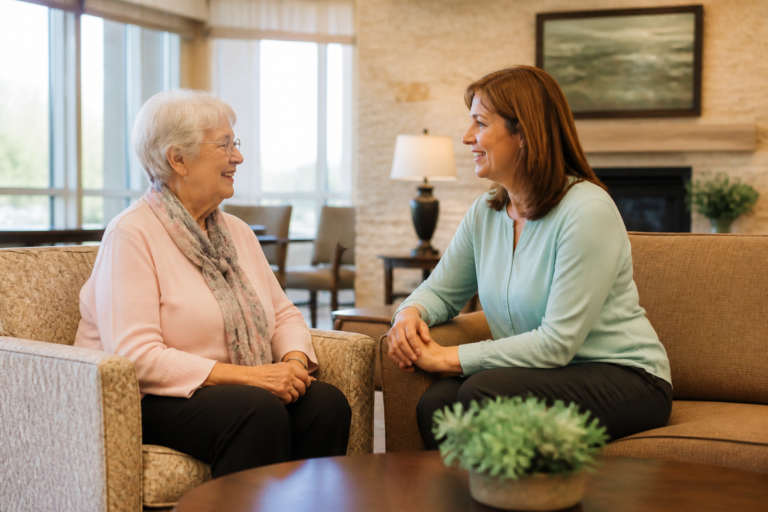

There is no specific age when a senior needs personal care. The more useful question is whether your loved one can complete essential daily tasks safely and consistently—and whether family support is dependable enough to meet changing needs. Difficulties with bathing, meals, medications, mobility, safety, or being alone may signal that it is time to review in-home services, community support, or a licensed personal care home.
Look for changes in daily function
Small changes can be easy to explain away, especially when they develop gradually. Instead of focusing on age or one isolated incident, look for patterns over several days or weeks. Has a task become slower, less safe, or impossible without reminders or hands-on help?
Common signs that a loved one may need more support include:
- Difficulty bathing, dressing, grooming, eating, or using the toilet.
- Needing help getting out of bed, standing from a chair, walking, or transferring.
- Falls, near-falls, increasing unsteadiness, or fear of falling.
- Missed, duplicated, or incorrectly taken medications.
- Difficulty shopping for groceries or preparing meals safely.
- Spoiled food, an unusually empty refrigerator, or significant weight change.
- Poor hygiene, soiled clothing, or clothing that is not appropriate for the weather.
- A home that has become unusually cluttered, dirty, or difficult to navigate.
- Confusion, worsening memory, personality changes, or poor judgment.
- Increasing loneliness or long periods spent without reliable contact.
The National Institute on Aging’s guidance identifies many of these changes—including medication problems, unsafe meal preparation, poor hygiene, falls, trouble walking, and social isolation—as reasons to consider additional support. One sign does not automatically mean residential care is necessary. It does mean the situation deserves a closer, practical review.
Understand the types of help involved
Activities of daily living
Activities of daily living, often called ADLs, are the basic personal tasks people manage every day. They commonly include bathing, dressing, grooming, toileting, eating, and moving around or transferring between a bed, chair, and standing position. A person who needs regular assistance with several of these tasks may benefit from personal care rather than occasional help.
Some people can complete an activity with extra time or an adaptive device. Others need verbal reminders, supervision, or hands-on assistance. That distinction matters when families compare care options. Write down what your loved one can do independently, what requires prompting, and what requires another person’s physical help.
Household and instrumental tasks
Other needs may not be personal care in the narrow sense, but they can still affect whether someone is safe living alone. These include grocery shopping, meal preparation, laundry, housekeeping, transportation, telephone calls, appointments, money management, and medication routines. Georgia’s personal care home rules describe daily living assistance broadly, including support with personal hygiene, eating, shopping, transportation, telephone calls, and appointments.
A person may still manage bathing and dressing but be unable to prepare food, remember appointments, or take medications consistently. In that situation, the right answer could be a combination of family help, home care, community programs, or a more structured setting.
When personal care may be appropriate
Personal care may be worth considering when assistance is needed regularly instead of only once in a while. Examples include recurring help with bathing, dressing, toileting, eating, walking, transfers, or medication support. The schedule matters: occasional help on weekends is different from needing assistance every morning, at meals, and again at bedtime.
In Georgia, a licensed personal care home provides housing, food service, and one or more personal services to two or more unrelated adults. State rules describe personal services as including assistance or supervision with self-administered medications, ambulation and transfers, eating, bathing, grooming, dressing, and toileting. You can review the state’s information about personal care homes and facility information when researching options.
Residential personal care may become more relevant when:
- Needs occur throughout the day or overnight.
- Your loved one is not safe when alone.
- Family members cannot reliably cover the needed schedule.
- Mobility or transfers require consistent assistance.
- Meals, hygiene, medication routines, or supervision are frequently missed.
- The home cannot be made sufficiently safe with reasonable changes.
- A structured setting with ongoing oversight would reduce daily risk and stress.
At Comfort Cove Senior Living in Lawrenceville, families can learn about 24/7 personal care, assistance with activities of daily living, mobility and transfer support, medication support, home-cooked meals, and private or shared suites. Reviewing the services available can help you prepare questions, but a conversation with your loved one and appropriate healthcare professionals should guide the decision.
Compare support at home with residential care
Many older adults can remain at home with the right combination of support. The National Institute on Aging’s aging-in-place guidance discusses options such as personal care, household assistance, meals, transportation, medication-related help, home safety changes, and emergency response systems. Support may come from relatives, friends, paid caregivers, or community programs.
Home support may work well when needs are predictable, the home can be made safer, and reliable caregivers are available. A residential setting deserves consideration when support must be coordinated across most of the day, when overnight needs are present, or when family members are carrying a schedule they cannot sustain.
Caregiver capacity is part of the assessment. If a family member is missing work, losing sleep, managing frequent emergencies, or feeling unable to provide safe transfers, the current plan may no longer be adequate. Recognizing that limit is not abandoning a loved one; it is part of planning responsibly.
Use this simple care-needs checklist
Track your observations for several days or weeks. This is a planning tool, not a clinical assessment.
- What tasks can the person complete independently?
- Which tasks require reminders, supervision, or hands-on help?
- Has the person fallen, nearly fallen, or become afraid to walk?
- Can they prepare food safely and stay hydrated?
- Are medications available and taken as directed?
- Can they use the bathroom and bathe safely?
- Can they get in and out of bed or a chair?
- Is confusion occasional, ongoing, or sudden?
- How often is help needed: weekly, daily, or overnight?
- Can family caregivers realistically maintain the schedule?
Bring your notes to a healthcare appointment and use them when speaking with care providers. Ask what level of assistance is available, how needs are assessed, how medication support is handled, and what happens if mobility or care needs change.
Know which changes need prompt attention
A sudden change should not automatically be treated as normal aging or simply as a need for more caregiving. Sudden confusion or a sudden unexplained change in mental status can require urgent medical attention. MedlinePlus guidance on confusion advises seeking emergency help for sudden confusion, particularly when it occurs with symptoms such as faintness, fever, breathing changes, head injury, or loss of consciousness.
Falls also deserve attention, even when there is no obvious injury. The National Institute on Aging’s fall-prevention information recommends reporting falls to a healthcare provider because medications, vision problems, balance changes, or other health concerns may contribute. Contact a qualified healthcare professional about repeated falls, significant weight changes, medication problems, or rapid functional decline. This article cannot diagnose a medical condition or determine the right level of care for an individual.
Start the conversation respectfully
Older adults may feel that a discussion about care is really a discussion about losing independence. Begin with a specific observation rather than a judgment such as, “You cannot live alone anymore.” Ask what your loved one has noticed and what kind of help they would find useful.
- “I noticed the refrigerator has very little food. Are grocery trips becoming difficult?”
- “You seemed unsteady getting out of the chair. Would you be willing to talk about safer ways to move around?”
- “Would it help if we made a list of the tasks you want assistance with?”
Involve your loved one in comparing choices whenever possible. You may also want to share responsibilities among family members, friends, and community resources. The federal Eldercare Locator can connect older adults and caregivers with local services such as meals, transportation, home care, caregiver education, and respite support. It is available online or by phone at 1-800-677-1116.
Questions families often ask
When does a senior need personal care instead of occasional help?
Regular, recurring assistance with bathing, dressing, toileting, eating, walking, transfers, or medication routines is a practical reason to explore personal care. The need for help throughout the day or night may point toward a more structured setting.
Does one fall mean my loved one needs residential care?
No. One fall does not automatically determine the right living arrangement. It should prompt a safety and health review, especially if the fall was unexplained, caused an injury, or is followed by fear of walking or repeated unsteadiness.
Can someone with memory loss remain at home?
That depends on the person’s abilities, safety risks, supervision needs, home environment, and available support. Memory loss alone does not establish that residential care is necessary. Discuss changes in memory or judgment with a healthcare professional and assess whether the person can safely manage daily routines.
How can I tell whether our family care plan is no longer enough?
Look at whether help is being provided reliably and safely. Frequent missed tasks, emergency calls, caregiver exhaustion, unsafe transfers, or long periods when the person is alone may indicate that the plan needs to change.
What should I ask when touring a personal care home?
Ask how the community assesses individual needs, supports mobility and transfers, handles medication assistance, serves meals, responds to changing needs, and communicates with families. Confirm licensing and inspection information through Georgia’s Department of Community Health resources, including GaMap2Care, before making a decision.
Take the next step when you have enough information
The question is not whether a senior is “old enough” for personal care. It is whether they can complete essential daily tasks safely and consistently, and whether the current support system is dependable. Tracking changes early gives your family more time to compare in-home services, community programs, and licensed residential options.
If you are exploring care in Gwinnett County, you are welcome to review care options, learn more about Comfort Cove Senior Living in Lawrenceville, or schedule a conversation or tour to discuss your questions without pressure.
Sources
- Does an Older Adult in Your Life Need Help? | National Institute on Aging
- Services for Older Adults Living at Home | National Institute on Aging
- dch.georgia.gov
- Aging in Place: Growing Older at Home | National Institute on Aging
- Confusion: MedlinePlus Medical Encyclopedia
- Falls and Fractures in Older Adults: Causes and Prevention | National Institute on Aging