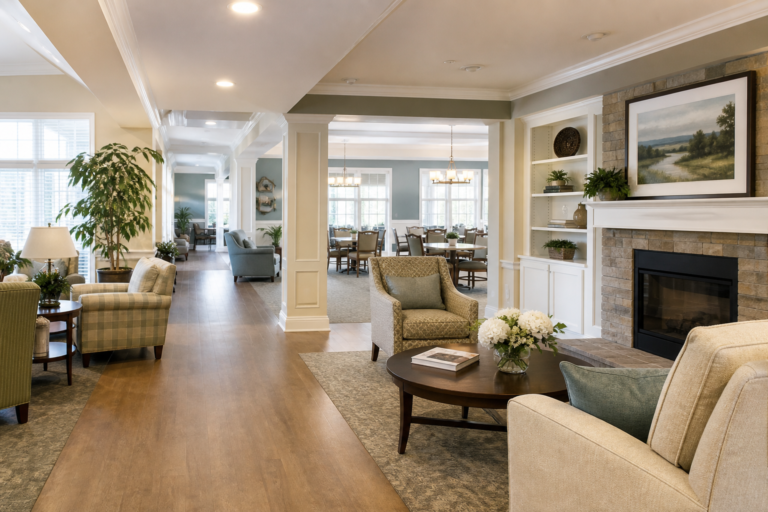

Families looking for senior care homes near the Mall of Georgia with 24-hour staff should confirm that caregivers are physically present overnight, ask about staffing on each shift, and verify the home’s Georgia license and inspection information. A personal care home may provide round-the-clock supervision and help with daily activities, while nursing homes serve residents who need a higher level of skilled nursing care.
What “24-hour staff” should mean
The phrase “24-hour care” can describe different arrangements. Some services provide caregivers in a person’s home for scheduled hours, while others offer an on-site residential setting with staff available day and night. When comparing a senior care home near the Mall of Georgia, ask whether staff are physically present overnight—not simply available by telephone.
Georgia personal care home rules require at least one administrator, on-site manager, or responsible staff person to be on the premises 24 hours a day and available to respond to residents’ needs. The rules also address staffing on occupied floors and require additional staffing when residents’ care needs call for it. You can review the Georgia personal care home regulations for the current requirements.
That does not necessarily mean a registered nurse is continuously on-site, or that a personal care home provides hospital-level or skilled nursing care. Ask who is scheduled overnight, whether that person is awake, how many residents they support, and what happens if a resident falls, becomes ill, or needs help transferring.
Services to compare during a tour
Many older adults need support with everyday routines rather than continuous medical treatment. A personal care home may assist with activities of daily living, including:
- Bathing, grooming, dressing, and toileting
- Walking, ambulation, and transfers
- Eating and following prescribed diets
- Medication reminders or other permitted medication assistance
- Personal supervision and overnight response
- Social, recreational, and wellness activities
Georgia rules describe direct-care services as including help with medication-related tasks, ambulation, transfers, eating, bathing, grooming, dressing, toileting, and other essential daily activities. The exact services a home can provide depend on its authorization, staffing, policies, and the resident’s needs.
Ask what medication support includes
“Medication support” is not a single level of service. It may mean reminders or assistance with self-administration, such as retrieving a labeled container or helping a resident handle certain permitted medications. Other situations may require medication administration by appropriately authorized staff.
Ask who handles medications, what training or authorization applies, how orders are documented, and how changes from a physician or pharmacy are communicated. Families should share a complete medication list and ask the home to assess whether it can safely meet the resident’s current needs.
Review the living arrangements
The physical setting matters as much as the service list. Ask to see the room or suite, bathrooms, dining area, common spaces, and any outdoor areas. Check whether the layout is comfortable for someone using a walker or wheelchair and whether staff can respond easily from each occupied floor.
Comfort Cove Senior Living is a licensed personal care home in Lawrenceville, near the Mall of Georgia, serving families in Gwinnett County. Its listed services include 24/7 personal care, help with daily activities, mobility and transfer assistance, medication support, home-cooked meals, and private or shared suites. Families should still ask the team to explain current overnight coverage, admission criteria, and which services are included for a particular resident.
Learn more about the home’s approach on the Comfort Cove Our Home page or review the broader list of services.
Personal care home or nursing home?
A personal care home is generally a residential setting for adults who need supervision and assistance with personal care. A nursing home is intended for people who require a higher level of nursing care and ongoing medical supervision. The right choice depends on the older adult’s health, mobility, cognitive status, treatments, and expected changes in condition—not simply on whether a facility advertises 24-hour care.
For example, someone who needs help bathing, dressing, eating, walking, or taking medications may be appropriate for a personal care setting, subject to the home’s assessment and capabilities. Someone who needs continuous skilled nursing, complex clinical treatment, or rehabilitation may need a different type of provider. Medicare distinguishes long-term custodial assistance from short-term skilled nursing and rehabilitation; long-term custodial care is generally not covered by Medicare when it is the only care needed. The Georgia Attorney General’s long-term care guidance offers additional consumer information.
This is a general guide, not an individualized medical recommendation. Discuss changing or complex care needs with the older adult’s physician and the prospective provider. A home should explain when it can no longer safely meet a resident’s needs and what its transfer or discharge process involves.
How to verify a home before choosing it
Before signing an agreement, verify that the home is licensed for the type of care it provides. Georgia’s Department of Community Health Healthcare Facility Regulation Division oversees personal care homes. Its facility resources can help families locate licensing and inspection information, although records and regulations can change over time.
- Search for the home through Georgia’s facility lookup resources.
- Review available inspection or enforcement information.
- Ask the home to show its current license and explain any limitations.
- Compare services, accommodations, fees, and payment policies in writing.
- Request copies of admission, discharge, emergency, and medication policies.
The state’s Personal Care Homes information is a useful starting point. Families who need help understanding long-term support choices can also contact Georgia’s Aging and Disability Resource Connection.
Questions to ask when touring a senior care home
- Is staff physically on-site 24 hours a day?
- Who is on duty overnight, and are they awake?
- How many residents does each direct-care staff member support on each shift?
- Is there staff on every occupied floor?
- What happens if an employee calls out?
- How do caregivers help with bathing, toileting, transfers, eating, and walking?
- What exactly does medication support include?
- Are nurses or certified medication aides available, and at what times?
- How are falls, hospital visits, emergencies, and changes in condition communicated?
- Which services, meals, supplies, or levels of assistance cost extra?
- What are the admission, discharge, and transfer policies?
Notice how staff interact with residents during the visit. Are responses calm and respectful? Do residents appear engaged and comfortable? Ask whether you can visit at a different time of day, including an evening, to better understand the daily rhythm and overnight plan.
Finding the right next step in Lawrenceville
A short drive from the Mall of Georgia does not by itself make a care home a good fit. The most important comparison is whether the home’s staffing, services, environment, and policies match the older adult’s needs today and are likely to remain appropriate as those needs change.
Comfort Cove Senior Living welcomes families exploring personal care options in Lawrenceville and Gwinnett County. Use the care options page to continue your research, then contact Comfort Cove to schedule a tour and ask specific questions about overnight staffing and personal care.
Frequently asked questions
What does 24-hour senior care mean in a personal care home?
It generally means that a responsible staff member is on the premises around the clock and available to respond to resident needs. It does not automatically mean that a registered nurse is continuously on-site or that skilled nursing services are provided.
Are caregivers awake overnight?
Ask each home directly. Staffing requirements and a home’s care plan do not always answer whether every overnight direct-care worker is awake. Confirm who is scheduled, whether the person is awake, and how residents request help.
Can personal care homes help with medications?
Some can provide reminders or assistance with self-administration, while other medication tasks may require appropriately authorized staff. Ask what the home is permitted and prepared to do for your loved one’s specific medication routine.
How can I verify a Georgia senior care home’s license?
Start with the Georgia Department of Community Health’s personal care home resources and facility lookup tools. You can also ask the home to provide its current license and information about recent inspections.
Does Medicare pay for personal care home services?
Medicare generally does not cover long-term custodial care when that is the only care a person needs. Coverage depends on the specific service and circumstances, so review costs with the home and consult a qualified benefits counselor or Medicare adviser.
Sources
- GA R&R – GAC – Subject 111-8-62 PERSONAL CARE HOMES
- Long-Term Care | Georgia Attorney General's Consumer Protection Division
- ADRC | Georgia Department of Human Services Division of Aging Services
- Personal Care Homes | Georgia Department of Community Health