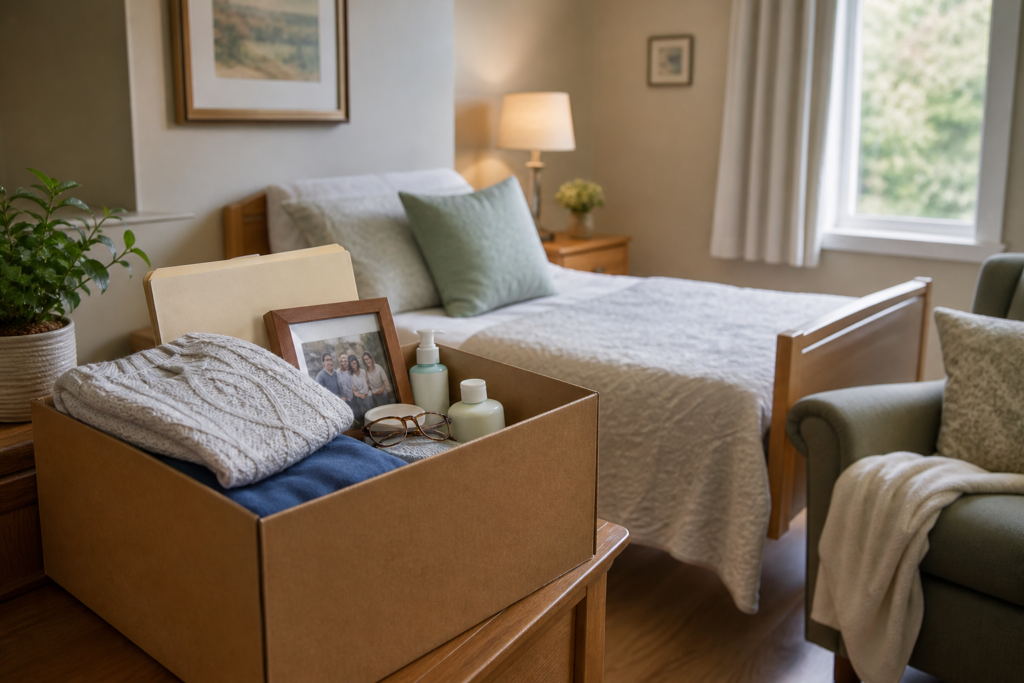
When moving to a personal care home, a senior typically needs comfortable clothing, personal-care supplies, approved medications, medical and emergency information, mobility or communication devices, and a few meaningful belongings. Before packing, confirm what the home already provides, how much storage is available, how laundry and medications are handled, and which items require approval.
Start with the personal care home’s packing guidelines
Every home has its own room setup and house rules. Ask for a move-in checklist before shopping or placing items in boxes. Find out whether the room includes linens, towels, a television, a trash can, or basic toiletries. Also ask about closet and dresser space, laundry labeling, electrical appliances, decorations, visitors, pets, and storage for valuables.
In Georgia, personal care home rules describe certain bedroom furnishings the home must provide, including a bed and mattress, lighting, a closet or wardrobe, a dresser or equivalent, a chair with arms, and a mirror. That means families should not automatically bring large furniture or bedding without checking first. Review the Georgia personal care home rules and confirm the room’s actual furnishings with the home.
What to bring when moving to a personal care home
1. Comfortable, easy-care clothing
Pack enough clothing for daily changes without overfilling the room. Practical choices may include:
- Everyday shirts, pants, skirts, or other comfortable outfits
- Undergarments and socks
- Pajamas and a robe
- Sweaters, jackets, and weather-appropriate outerwear
- Comfortable, supportive shoes with nonslip soles
- A small number of dressier outfits
- A laundry bag or hamper, if permitted
- Hangers, if the home does not provide enough
If the resident needs help dressing, choose clothing that is easy to put on and remove. The Alzheimer’s Association dressing guidance also recommends comfortable clothing and nonslip shoes for people who may need assistance with daily care.
Label clothing discreetly with the resident’s name and make a simple inventory. This can help the family and care team identify missing items, especially when laundry is handled by the home. Georgia rules state that the home maintains an inventory of personal items when the resident or representative provides one.
2. Toiletries and grooming supplies
Bring familiar products when they are important to the resident’s routine. Depending on what the home supplies, this may include:
- Toothbrush and toothpaste
- Denture supplies and a denture case
- Soap, shampoo, conditioner, deodorant, and lotion
- Hairbrush or comb
- Shaving supplies or an electric shaver
- Makeup or other familiar grooming products
- Incontinence supplies, if needed and not supplied by the home
Ask whether towels, washcloths, toilet paper, and basic toiletries are included. Avoid buying a large supply until you understand what the home provides and how personal-needs items are managed.
3. Medications and medication information
Medication preparation deserves a separate conversation before moving day. Ask whether the resident will self-administer, receive assistance, or have medications administered; who obtains refills; whether a pharmacy delivers directly; and whether special packaging is required.
Do not simply place every medication in a suitcase. The home’s procedure may require prescriptions and over-the-counter medications to be delivered to staff, a pharmacy, or another designated medication-management program. Medications kept at the home must remain in their original containers with the original labels intact under the Georgia personal care home rules.
Prepare an up-to-date medication and health-information list that includes:
- Prescription and over-the-counter medications
- Dosages and administration instructions
- Allergies and significant reactions
- Prescribing provider and pharmacy information
- Relevant physician instructions and dietary information
Give this information to the home through its admission process, and ask what must be supplied by the prescribing provider. Families should not change, stop, or combine medications without guidance from the resident’s clinician or pharmacist.
4. Mobility, hearing, vision, and communication items
Pack the devices the resident uses every day, such as eyeglasses, hearing aids, dentures, a cane, walker, wheelchair, or another approved mobility device. Include backup eyeglasses if available, hearing-aid batteries, a storage case, and labels on removable items.
Other useful items may include a cell phone, charger, simple contact list, and a familiar clock or calendar. Ask whether equipment such as a CPAP machine or other personal medical device requires advance approval, physician instructions, staff training, or special storage. The home should assess equipment and care needs before move-in rather than leaving families to make assumptions.
5. Important documents
Create a move-in folder or secure digital file. The home can tell you which records it needs and whether copies are acceptable. Commonly requested information may include:
- Resident identification information
- Emergency contacts and next-of-kin information
- Physician, hospital, pharmacy, and other provider contacts
- Insurance information
- Medication and allergy list
- Diagnoses, prescribed diets, and physician instructions
- Advance directive or Georgia advance directive for health care
- Physician Orders for Life-Sustaining Treatment, when applicable
- Documents identifying a health-care or financial representative
- Copies of the admission agreement and care-related paperwork
The Georgia rules for personal care homes identify many categories of provider, health, medication, representative, and advance-care information that may be maintained in a resident’s file. Ask which documents are required for this move and keep original legal documents secure unless the home specifically requests otherwise.
6. Familiar belongings and comfort items
A few familiar objects can make a new room feel more personal without creating clutter. Consider:
- Family photographs
- A favorite blanket or quilt
- Religious or spiritual items
- Favorite books, music, or puzzles
- A small piece of artwork
- A compact familiar chair, if space and safety allow
- A calendar, clock, or memory display
Photograph valuable belongings and record serial numbers when relevant. Ask about locked storage before bringing jewelry, cash, or other valuables. Georgia rules address residents’ personal property and require a means of locked storage for valuables or personal belongings upon request, subject to the home’s procedures and available arrangements.
What to leave behind or confirm first
Do not bring these items without checking the home’s written rules:
- Large furniture or extra bedding
- Throw rugs or objects that could obstruct walkways
- Candles, incense, or open-flame items
- Space heaters or unapproved appliances
- Weapons or decorations that may create a safety concern
- Large amounts of cash or expensive, irreplaceable jewelry
- Duplicate household supplies
- Any medication that has not been cleared through the home’s medication process
These are not necessarily universal prohibitions. The home’s rules may address personal property, appliances, pets, tobacco, alcohol, visitors, and other aspects of daily living. Asking before packing is the safest approach.
Pack a separate first-night bag
Keep immediate essentials separate from moving boxes so the resident can access them while the room is being arranged:
- One change of clothes
- Pajamas and a robe
- Toiletries
- Eyeglasses and hearing-aid supplies
- Phone and charger
- Important contact information
- Medication information and medications handled according to the home’s instructions
- A favorite photograph or comfort item
- A water bottle or snack, if permitted
Questions to ask before moving day
- What furniture, linens, towels, and toiletries are already provided?
- How much closet, dresser, and storage space is available?
- How should clothing be labeled, and how does laundry work?
- What is the medication delivery, packaging, storage, and refill process?
- Which mobility devices or medical equipment need approval?
- Are appliances, decorations, rugs, food, or small furniture items allowed?
- How should valuables be documented and stored?
- Which medical, legal, and emergency documents should be provided?
For families considering personal care services or comparing care options in Gwinnett County, these questions can also help clarify whether a home’s daily routines fit the resident’s needs. At Comfort Cove Senior Living, families can learn more about our home or schedule a conversation or tour before making a decision.
Frequently asked questions
Does a senior need to bring a bed or dresser?
Usually, families should first confirm what the room already includes. Georgia personal care home rules describe required bedroom furnishings, but the exact room arrangement and available storage should be confirmed with the individual home.
Should medications go in the moving boxes?
Not without instructions. Ask the home how medications must be delivered, packaged, labeled, and documented. The home may require them to go directly to staff, a pharmacy, or another approved medication process.
How many clothes should a senior bring?
Bring enough comfortable, seasonally appropriate clothing for regular changes, but avoid filling the room before you know its storage capacity. Label items and ask how often laundry is collected and returned.
Can a resident bring personal photographs and religious items?
In many cases, familiar and meaningful belongings are appropriate, as long as they fit safely within the room and follow house rules. Ask about hanging items, electrical devices, and storage before decorating.
What documents should the family keep at home?
Ask the home which records require copies and which, if any, require originals. Keep original legal and identity documents secure unless a qualified professional or the home specifically explains why an original is needed.
Sources
- GA R&R – GAC – Subject 111-8-62 PERSONAL CARE HOMES
- Dressing & Grooming | Alzheimer's Association
- GA R&R – GAC – Subject 111-8-62 PERSONAL CARE HOMES