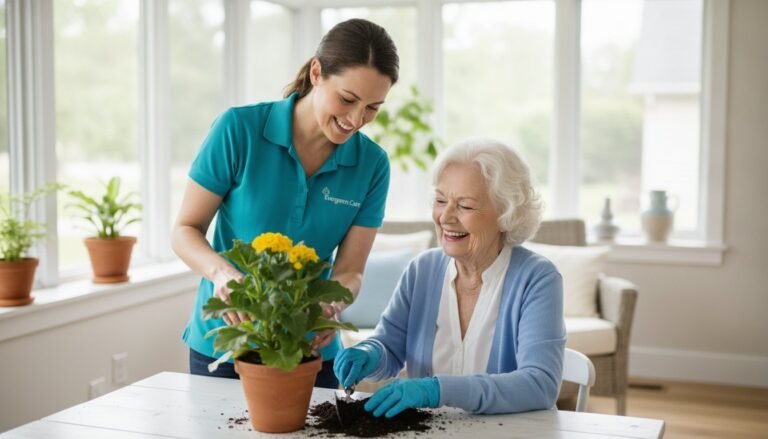
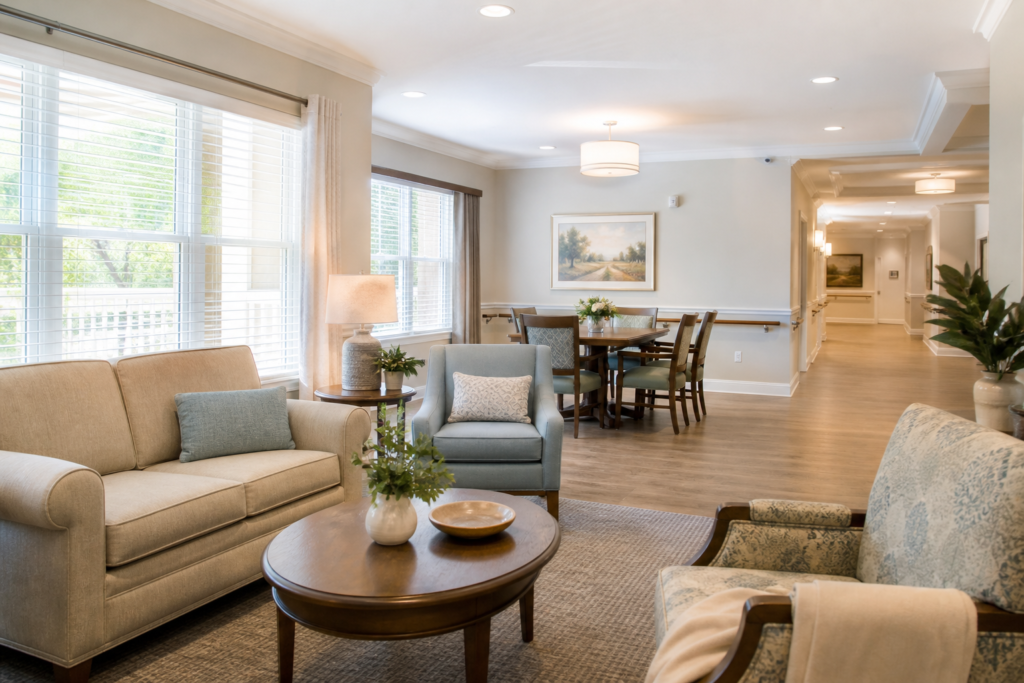
A personal care home in Georgia is a residential setting that provides housing, meals, supervision, and at least one type of personal assistance to two or more unrelated adults. Depending on the home and a resident’s needs, services may include help with daily activities, mobility and transfers, and supervision of self-administered medications.
What does a personal care home provide?
Personal care homes are intended to feel like residential communities rather than clinical settings. A home provides a place to live, food service, and personal services for adults who need support with some everyday tasks.
Under Georgia’s personal care home rules, personal services may include assistance with or supervision of:
- Bathing, grooming, dressing, and personal hygiene
- Eating and toileting
- Walking, ambulation, and transfers
- Self-administered medications
- Social, recreational, and wellness activities
Some homes may also arrange or provide transportation for needs such as shopping, recreation, rehabilitation, or medical appointments. The exact services, schedule, staffing, and fees differ from one residence to another, so families should ask for a written description rather than assume that every personal care home offers the same level of support.
For example, Comfort Cove Senior Living in Lawrenceville provides 24/7 personal care, assistance with activities of daily living, mobility and transfer support, medication support, home-cooked meals, and private or shared suites. Families comparing options in Gwinnett County can learn more about the home’s approach on the services page and Our Home page.
How is medication support handled?
Medication support deserves specific questions. In a personal care home, a resident may take medication independently, or staff may assist with or supervise self-administration when permitted and appropriate. That is different from assuming that staff provide ongoing nursing care or independently make medical decisions.
Georgia rules include requirements for training, documentation, medication records, and secure medication-handling procedures when a home provides medication assistance. Ask how staff document medications, who communicates with a resident’s physician or pharmacy, and what happens when a medication changes. Families should also confirm whether medication support is included in the resident’s agreement or carries an additional charge.
What a personal care home does not provide
A personal care home is not a substitute for a hospital, skilled nursing facility, or continuous nursing service. Georgia rules generally limit admission or retention of residents who require continuous medical services or continuous nursing care and treatment. A home also may not retain a resident whose needs exceed the care it is authorized or able to provide.
Residents generally need to be ambulatory and capable of self-preservation with minimal assistance, although Georgia rules allow limited aging-in-place exceptions for certain non-ambulatory residents under specified conditions. Because eligibility can depend on a person’s functional and medical needs, families should discuss concerns with the residence and the appropriate healthcare professionals before making a move-in decision.
This distinction matters when a person’s condition changes. Ask how the home evaluates changing needs, when it involves the family or healthcare providers, and what circumstances could require a transfer to a setting with a different level of care.
Personal care home versus assisted living in Georgia
In everyday conversation, people sometimes use personal care home and assisted living interchangeably. In Georgia, however, they are separate license categories with different regulatory requirements.
A personal care home that is not specifically licensed as an assisted living community may not provide assisted-living care or use assisted living in its name or marketing materials. When comparing residences, ask:
- What type of license does the residence hold?
- What services does that license authorize?
- Does the residence accept the type and level of assistance the prospective resident needs?
- What changes in care would require a new assessment or transfer?
The license category is only one part of the decision, but it helps families understand the regulatory framework behind the services being offered. If the terminology in a brochure or tour is unclear, ask the administrator to explain it in writing.
How are Georgia personal care homes regulated?
Georgia personal care homes are regulated by the Georgia Department of Community Health’s Healthcare Facility Regulation Division. A home must have a current permit before operating or admitting residents, display that permit where residents and visitors can see it, and stay within its approved licensed capacity.
The Department of Community Health conducts initial, compliance, monitoring, follow-up, and complaint surveys. Families can use the state’s Personal Care Homes resource page to find facility information and access GaMap2Care, where available, for listings, license details, and inspection reports. Reviewing these records can add useful context to a tour, but it should not replace asking direct questions about current staffing, services, and resident fit.
Staffing, rooms, and resident agreements
Georgia rules require at least one administrator, on-site manager, or responsible staff member to be on the premises and available to respond to residents’ needs at all times. At least one staff person must be present on each occupied floor. Staffing must also be appropriate for residents’ ongoing health, safety, and care needs.
For homes licensed for fewer than 25 beds, the rules establish minimum awake direct-care staffing levels that vary between waking and non-waking hours. These are minimum regulatory requirements, not a promise that the same staffing pattern will meet every resident’s needs. Ask how many staff members are typically present during the hours when your family member needs the most help.
Physical surroundings also matter. Georgia requirements address safe common areas, dining areas, mobility supports, and resident bedrooms or private living spaces. In general, bedrooms must provide at least 80 square feet of usable floor space per resident, and no more than four residents may generally share a bedroom. Older homes may qualify for a limited historical exception.
Before move-in, the resident and home must enter into a written admission agreement. Review it carefully for:
- Current fees and charges, including possible extra service fees
- Services included in the basic arrangement
- Medication procedures and transportation arrangements
- House rules and visiting policies
- Refund policies
- Discharge and transfer procedures
The agreement should match what the family was told during the call and tour. If it does not, pause and request clarification before signing.
A practical checklist for comparing homes
When visiting a personal care home in Lawrenceville, near the Mall of Georgia, or elsewhere in Gwinnett County, consider bringing this checklist:
- Verify the license category, permit status, and approved capacity.
- Ask how the home supports bathing, dressing, toileting, meals, mobility, and transfers.
- Ask who is on-site overnight and how staff respond to urgent needs.
- Review medication assistance, documentation, storage, and communication procedures.
- Compare private and shared room arrangements, including what furnishings are provided.
- Request a complete fee schedule and read the admission agreement.
- Review available inspection information through GaMap2Care.
- Ask how the home responds if a resident’s needs become greater than it can provide.
- Notice whether residents appear comfortable, respected, and able to participate in daily life.
There is no single best setting for every adult. The right choice depends on the person’s abilities, preferences, health needs, budget, and likely changes over time. Families can explore different care options and contact Comfort Cove to ask questions or schedule a tour. A tour is an opportunity to compare the residence, written services, and care approach with the needs of your family member—not a substitute for individualized advice from qualified healthcare or legal professionals.
Frequently asked questions
Who may be a good fit for a personal care home?
A personal care home may suit an adult who needs residential support and help with daily activities but does not require continuous medical services or nursing care. The home must determine whether it can safely meet the person’s needs.
Are personal care homes the same as nursing homes?
No. Personal care homes provide housing, meals, supervision, and personal assistance within their permitted scope. They are not designed to replace continuous skilled nursing or medical care.
How can I check a Georgia personal care home?
Start with the Georgia Department of Community Health’s personal care home resources and GaMap2Care. Review available license and inspection information, then ask the residence about current staffing, services, fees, and admission criteria.
Can a personal care home help with medications?
It may be able to assist with or supervise self-administered medications when permitted and when the home follows applicable training, documentation, recordkeeping, and secure-handling requirements. Ask for the home’s specific medication procedures.
What should I do if my family member’s needs change?
Tell the administrator and involve the person’s healthcare professionals. Ask whether the home can continue to provide the needed support, what reassessment is required, and whether another care setting may be safer or more appropriate.
Sources
- GA R&R – GAC – Subject 111-8-62 PERSONAL CARE HOMES
- Personal Care Homes | Georgia Department of Community Health
- GA R&R – GAC – Subject 111-8-62 PERSONAL CARE HOMES