In a personal care home, a private suite generally gives one resident exclusive use of a designated bedroom or living space, while a shared suite places two or more residents in the same sleeping or living area. The choice affects privacy, routines, storage, social interaction, bathroom access, and sometimes cost. Families should compare the actual floor plan and written agreement—not just the word “suite.”
What private and shared suites usually mean
A private suite or private living space normally means the resident has exclusive use of the designated bedroom or living area. This can make it easier to control bedtime, lighting, television, visitors, conversations, and the arrangement of personal belongings.
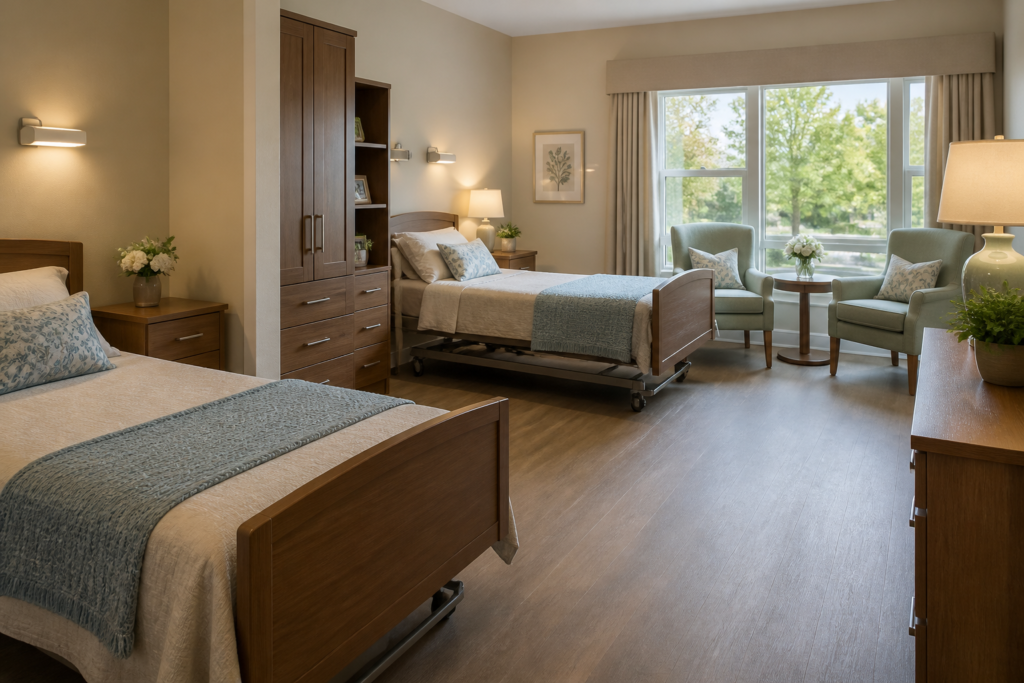
A shared suite means that two or more residents occupy the same bedroom or private living space. Sharing may provide regular companionship, but it also requires residents to coordinate daily habits and respect one another’s need for rest and personal space.
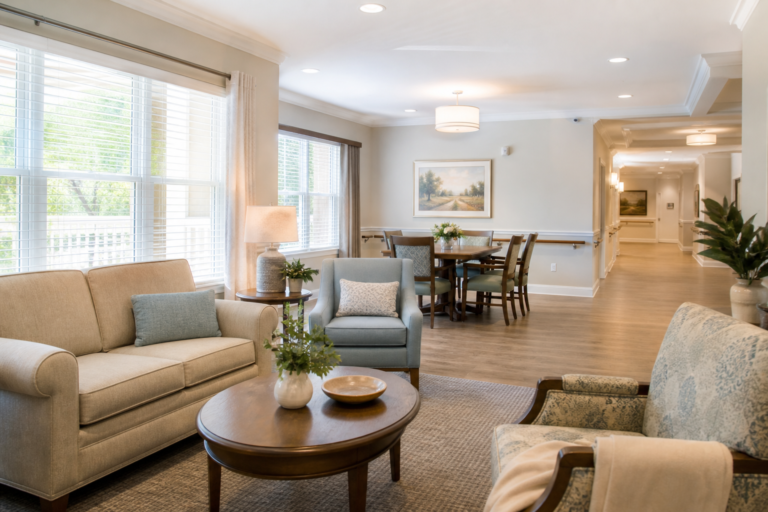
The word suite can describe several different layouts. It might mean a private bedroom with a sitting area, a bedroom shared by two residents, or a space connected to a bathroom. It does not automatically tell you whether the bedroom, sitting area, or bathroom is private. Ask to see the exact space being offered and request the arrangement in writing.
How the choice can affect daily life
Privacy and personal routines
Private living space generally offers more control over quiet time, sleep schedules, phone conversations, personal care, and visitors. It may be especially appealing to someone who is easily disturbed by noise or who values solitude.
In a shared room, residents may have different sleep patterns, television preferences, or comfort levels with conversation. A thoughtful roommate match and clear communication can help, but families should ask how the home addresses disagreements or incompatible routines.
Companionship and social connection
Some residents enjoy having a roommate nearby, particularly if they like conversation or feel more comfortable with company. Others may prefer to spend time with people in common areas and have a private bedroom for rest.
A shared suite should not be the only way a resident can socialize. Ask about dining, activities, common living areas, outdoor areas, and opportunities to spend private time with family. Georgia personal care home rules address common living and dining areas, activities, and access to private areas for residents and visitors. The Georgia personal care home regulations are a useful starting point for understanding these requirements.
Storage and furnishings
Before moving in, find out what furniture the home provides and what the resident may bring. Ask about closet space, drawers, locked storage, walking paths, and where personal items will be placed. In a shared room, confirm how each resident’s bed, dresser, clothing, and keepsakes will be separated.
Families should also consider mobility. A room may look spacious during a tour but feel different once a walker, wheelchair, lift, or other equipment is present. Ask the home to explain how furniture placement supports safe movement and transfers for the individual resident.
Bathrooms and Georgia requirements
A private bedroom does not necessarily include a private bathroom, and a shared bedroom does not always mean the bathroom is shared only with that roommate. Bathroom arrangements vary by home and floor plan, so ask whether the bathroom is private, shared with a roommate, or shared with residents from other rooms.
Georgia rules require bathrooms to provide privacy for toileting, bathing, and showering. The rules also establish minimum ratios of at least one toilet and lavatory for every four residents and one bathing or showering facility for every eight residents. Review the state’s personal care home rule for the applicable requirements, and ask how the home’s actual layout works during busy times.
Georgia regulations also address bedroom and private living space. Generally, the space must provide at least 80 square feet of usable floor area per resident, with specific regulatory provisions and a limited exception for certain older, continuously operating homes. A resident room or private living space must also have features including an exterior window, separation from halls and other rooms, and a door with positively latching hardware. Families can verify the current rule rather than relying on a room label.
Resident privacy and roommate considerations
Sharing a room does not eliminate a resident’s right to dignity and privacy. Georgia residents have privacy rights in their rooms, including the expectation that staff knock before entering. Residents also have rights related to visitors, personal possessions, private telephone access, and privacy during personal care, as described in the Georgia regulations for personal care homes.
During a tour, ask how those rights are put into practice. Questions about roommate compatibility are also important:
- How are roommates matched?
- Can a resident request a roommate change?
- What happens if sleep schedules or care needs are not compatible?
- How are visitors handled in a shared room?
- What happens to the room assignment if one roommate moves out?
The answers can reveal more about the resident experience than the room category alone.
Cost, availability, and the written agreement
Private rooms may have different rates or may be less available than shared rooms, but families should not assume that every home prices or defines them the same way. Ask for a written explanation of the monthly rate, included services, additional charges, and any difference between private and shared arrangements.
Also ask what happens if a shared-room resident’s roommate leaves. The resident may remain in the room, move to another room, or have the rate reviewed, depending on the home’s policies and agreement. Request the admissions agreement before making a decision and read the sections covering room assignments, personal belongings, services, notice requirements, and payment terms.
The Georgia Attorney General’s long-term care guidance recommends comparing accommodations, prices, services, payment types, activities, and caregiver-to-resident ratios when evaluating long-term care settings.
Questions to ask during a tour
Bring this checklist and write down the answers for each home you visit:
- Is the space a private bedroom, shared bedroom, or a larger suite with separate sleeping areas?
- How many residents occupy the space?
- Is the bathroom private, shared with a roommate, or shared with residents from other rooms?
- What furniture is provided, and what may the resident bring?
- How much closet, drawer, and locked storage is available?
- Can residents control room lighting, temperature, television, and bedtime routines?
- How are roommates selected, and what is the process for resolving conflicts?
- Are visitors permitted in the room, and are there visiting policies?
- Does the monthly rate change by room type or if a roommate moves out?
- Can the family review the admissions agreement and current licensing or inspection information?
Families may also review information from the Georgia Department of Community Health, which provides personal care home licensing and regulatory resources. Licensing and inspection information can change, so confirm current details directly with the home and the appropriate state office.
Which option may be a better fit?
A private space may be a better fit for someone who needs quiet, has a highly individualized routine, or prefers more control over visitors and belongings. A shared space may suit someone who enjoys companionship, feels comfortable with a roommate, or prefers that arrangement after comparing the layout and policies.
There is no universally correct choice. Consider the resident’s preferences, sleep habits, mobility, need for personal care, comfort with social interaction, and ability to communicate concerns. If needs or preferences change, ask how easily the room arrangement can be revisited.
Comfort Cove Senior Living in Lawrenceville serves families in Gwinnett County with 24/7 personal care, assistance with activities of daily living, mobility and transfer support, medication support, meals, and private or shared suites. You can learn more through our care options, review our services, or schedule a tour to discuss the available layouts. A tour is an opportunity to ask practical questions and decide whether the setting fits the resident—not simply to choose a room label.
Frequently asked questions
Does a private suite always include a private bathroom?
No. “Private suite” can describe different layouts. Ask whether the bedroom, sitting area, and bathroom are each private or shared, and request the arrangement in writing.
How many people can share a room in a Georgia personal care home?
Georgia rules generally limit a room to no more than four residents and require residents to specifically choose in writing to share a bedroom or private living space. Confirm the current requirements and the home’s specific layout directly with the facility.
Can residents have privacy in a shared room?
Residents retain privacy rights, including privacy during personal care and the expectation that staff knock before entering. Families should ask how the home protects personal space, handles visitors, and separates belongings in shared rooms.
Is a private room always the better choice?
Not necessarily. A private room may offer more quiet and control, while a shared room may provide companionship and may better match a resident’s preferences or budget. The resident’s routine, comfort, and roommate compatibility matter.
Should families compare more than the room type?
Yes. Compare the care services, staffing approach, activities, meals, bathroom access, written fees, room policies, emergency procedures, and licensing information. A room category is only one part of evaluating a personal care home.
Sources
- GA R&R – GAC – Subject 111-8-62 PERSONAL CARE HOMES
- Long-Term Care | Georgia Attorney General's Consumer Protection Division
- Personal Care Homes | Georgia Department of Community Health