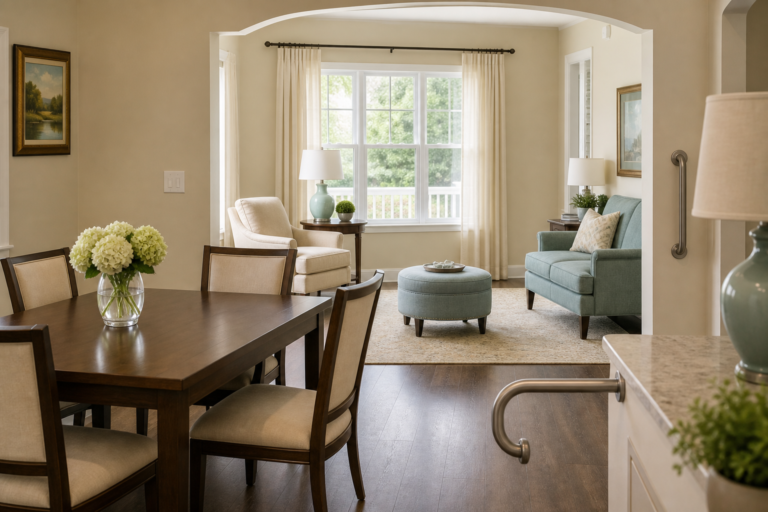
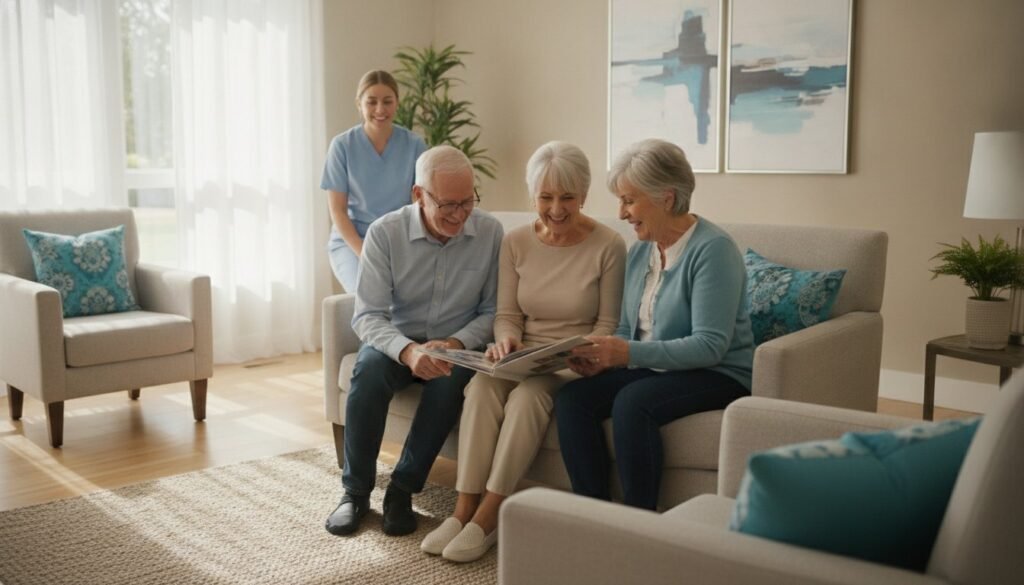
What if the most important decision for your parent’s future didn’t involve a clinical checklist, but rather the feeling of a sun-drenched living room and a familiar, friendly smile? You want the very best for your loved one; yet the maze of Georgia licensing terms often feels overwhelming when you are simply trying to ensure they are safe, active, and cherished. Many families find themselves stuck comparing a personal care home vs assisted living, wondering which path preserves a family member’s dignity while providing the necessary mobility support for daily life.
It’s natural to worry about choosing an environment that feels cold or institutional. You deserve clarity on how Georgia defines these care levels in 2026, especially regarding medication support and community size. This guide promises to uncover those essential differences so you can find a nurturing, boutique environment where your loved one truly belongs. We’ll walk through the latest state regulations, staffing ratios, and the specialized mobility options that allow seniors to thrive with independence and joy.
Key Takeaways
- Learn why Georgia’s specific licensing rules for 2026 are the foundation for your loved one’s safety and long-term security.
- Understand the critical differences in medication support and nursing tasks when choosing a personal care home vs assisted living.
- Discover how a boutique environment offers specialized mobility support, including Hoyer lifts, without sacrificing the warmth of a true home.
- Identify the best fit for your family by evaluating the desire for intimate residential care versus a larger-scale apartment setting.
- Find out how personalized attention in a smaller community can transform the aging process into a celebratory and active journey.
Understanding Senior Care Options: Why the Labels Matter
Transitioning a parent into a new stage of life is a deeply personal journey filled with both love and complex questions. You might find yourself looking at various brochures, wondering why the terminology feels so intricate and clinical. In Georgia, understanding the nuances of a personal care home vs assisted living is vital because these labels dictate the specific safety standards and care levels your loved one will receive. It isn’t just about legal compliance; it’s about ensuring the environment you choose can truly support their unique rhythm of life while protecting their dignity.
The Landscape of Senior Living in Georgia
Georgia’s regulatory landscape is unique, often surprising families who have researched options in other states. Here, the distinction typically hinges on the size of the community and the specific scope of medication assistance provided. While Assisted living is often used as a broad, catch-all term nationally, Georgia laws in 2026 provide clear boundaries to ensure every resident is safe. By focusing on “Personalized Senior Care,” you can look beyond these broad categories and focus on what matters most: your parent’s comfort and security. Matching the care level to your loved one’s current mobility and social needs is a gift of peace for the entire family.
Moving Beyond the “Facility” Mindset
For many families, the term senior living once conjured images of large, impersonal buildings with long, quiet corridors. However, there is a beautiful, modern movement toward boutique environments that offer a sense of “quiet luxury” and intimate connection. These smaller, home-like settings allow for a pace of life that is both steady and vibrantly active, moving away from the somber atmosphere of the past. Instead of a loss of independence, this transition is an invitation to a lifestyle of renewed vitality. In these smaller circles, residents form genuine friendships; meanwhile, caregivers become dedicated advocates who know every preference and story.
In a boutique setting, the focus remains on the richness of experience rather than the scale of the building. This environment naturally fosters deeper social bonds, making it easier for seniors to engage in exercise programs and social activities that keep the spirit high. When you choose a smaller community, you are choosing a partnership where your loved one’s identity is celebrated every single day.
This guide will simplify the 2026 landscape for you, breaking down the technicalities so you can move forward with confidence. You deserve to find a place that feels less like an institution and more like a warm, supportive home where your loved one can truly flourish. We’ll explore the specific services and physical environments of each option to help you make the most informed, heart-centered choice for your family.
What is a Personal Care Home in Georgia?
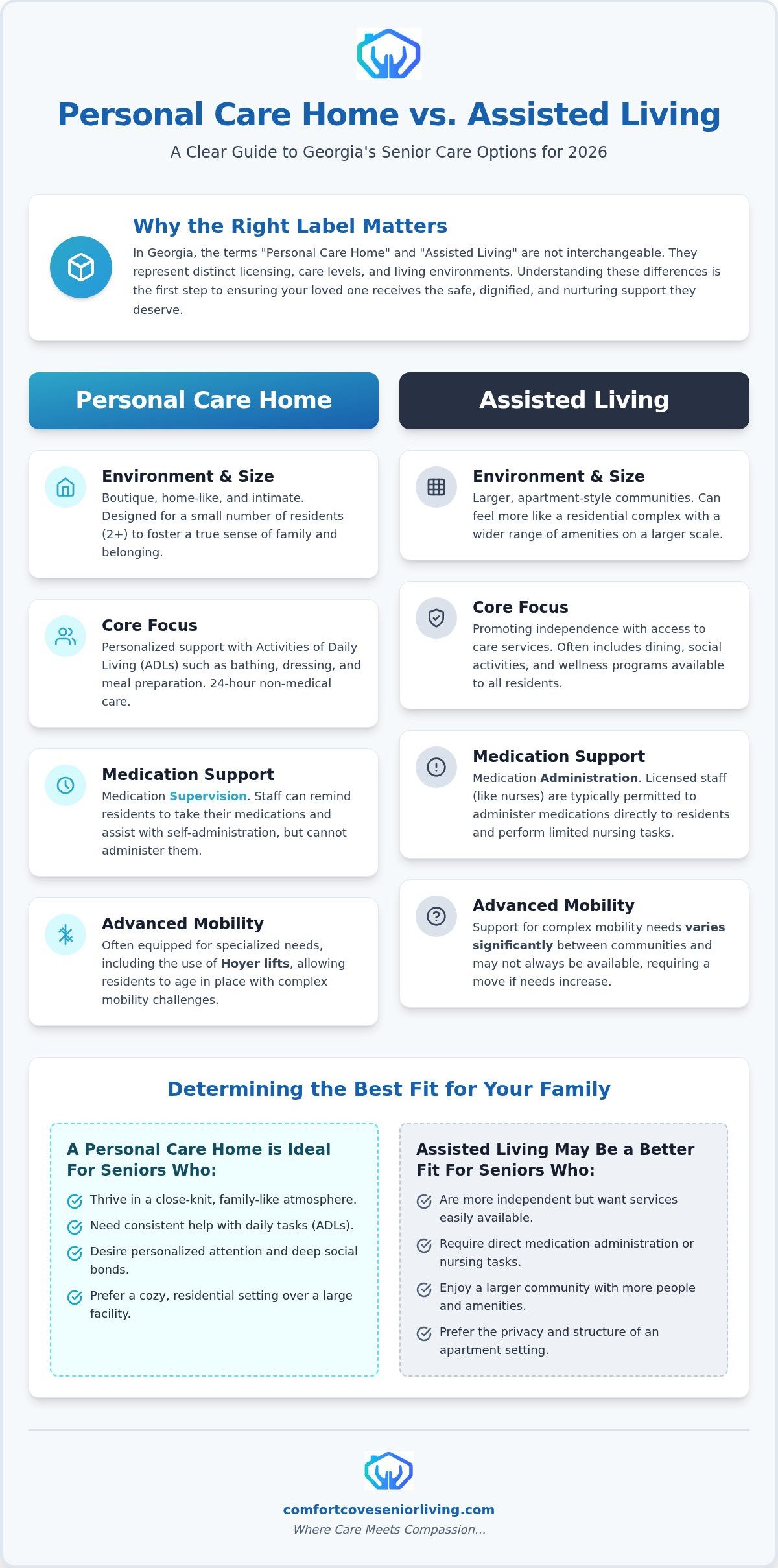
Imagine walking through a front door and smelling fresh coffee and home-cooked meals instead of the sterile scent of a hospital. A personal care home in Georgia is a nurturing residential community where two or more adults live together in a setting that feels like a true home. Unlike the larger environments you might encounter when researching a personal care home vs assisted living, these homes prioritize a sense of family and belonging. Residents receive 24-hour personal services that focus on the “Activities of Daily Living,” or ADLs. This includes support with bathing, dressing, and preparing delicious, shared meals. It’s about providing a helping hand that empowers your loved one to remain spirited and active.
When you are looking for the right fit, it’s helpful to consider guidance from the National Institute on Aging to understand how residential care differs from more clinical settings. In a personal care home, the focus stays on medication supervision and personal agency. It’s a place where your parent is known by name, and their favorite morning routine is honored with a smile. This level of care is designed to celebrate each individual’s identity while providing the security of around-the-clock support.
Licensing and Safety Standards
In Georgia, the Department of Community Health (DCH) oversees these homes under Chapter 111-8-62. These regulations ensure that every resident lives in a protective environment that meets high standards for safety and wellness. Because they are smaller, these homes avoid a clinical feel, opting instead for a cozy atmosphere that promotes emotional well-being. The boutique model serves as a safer, more intimate alternative to large-scale living by ensuring that no resident is ever lost in the crowd.
Who is a Personal Care Home Best For?
This setting is ideal for seniors who value their independence but need a helping hand with daily tasks to stay safe. It’s perfect for those who thrive in smaller, more socially engaged settings where they can build deep connections with their neighbors. If your loved one doesn’t require 24/7 clinical nursing but would benefit from a spirited community that handles the heavy lifting of daily chores, this is a wonderful choice. You can explore how personalized senior care services can transform your parent’s daily life into a journey of renewed vitality. This level of support ensures they can focus on the joy of living rather than the stress of managing a large house alone.
When you compare a personal care home vs assisted living, you’re looking at more than just a label; you’re looking at the scale of your loved one’s daily world. In Georgia, these two options serve different needs based on the level of clinical support required and the physical environment that best fosters a sense of peace. While larger communities often provide an apartment-style lifestyle, boutique homes offer an intimate, residential setting where safety and personal connection are deeply intertwined.
The Regulatory Divide in Georgia
The legal distinction between these two care levels is found within Georgia’s official healthcare regulations. The primary difference often comes down to medication management. Assisted living communities are licensed to have certified medication aides who can actually administer medicine. In contrast, personal care homes focus on supervision and assistance with self-administration. Additionally, residents in personal care homes must be capable of “assisted self-preservation,” meaning they can move to safety during an emergency with limited help. These rules ensure that each resident is placed in an environment that matches their physical capabilities and safety requirements.
Comparing Lifestyle and Social Engagement
In a large assisted living community, you might find a campus with hundreds of residents and a single activity director. While these environments offer many amenities, they can sometimes feel like busy hotels where a quiet individual might feel overlooked. A boutique home in Lawrenceville offers a spirited alternative. Because these homes are smaller, exercise and social programs are tailored to the specific interests of the people living there. This prevents the isolation that can occur in long, impersonal corridors.
The staffing ratios in smaller homes often mean there are more eyes on your loved one throughout the day. This proximity allows for highly personalized care and specialized mobility support, such as the use of Hoyer lifts or “stand to sit” assistance, which might be harder to coordinate in a massive facility. By understanding these nuances, you can better decide between a personal care home vs assisted living for your parent’s unique needs. Choosing a boutique environment ensures that your parent’s safety is managed with a nurturing touch that honors their dignity. This transition isn’t about a loss of independence; it’s about finding a supportive partner who celebrates your loved one’s unique journey every day.
Determining the Best Fit: A Guide for Families
Determining the best path forward for your parent is a journey of the heart. It requires a balance of practical assessment and emotional intuition. As you weigh the options of a personal care home vs assisted living, following a methodical yet compassionate approach can lead you to the most nurturing environment. This process is about more than just finding a room; it’s about finding a place where your loved one feels truly celebrated and secure.
First, look closely at physical mobility requirements with total honesty. Does your loved one require specialized equipment like Hoyer lifts or stand to sit support? While some larger communities might struggle to provide this level of one-on-one attention, boutique homes often specialize in these high-touch services. Next, consider the emotional impact of the physical environment. Does your parent prefer the bustling energy of a large apartment complex or the quiet luxury of a residential home? A house-like setting often feels more intuitive and less intimidating for seniors moving from a lifelong family residence.
Evaluate the level of personalized attention available. In smaller settings, the same friendly faces greet your parent every day, fostering a deep sense of security and belonging. This consistency allows caregivers to notice subtle changes in health or mood that might be missed in a larger rotation. Finally, reflect on social preferences. Some seniors thrive in large-scale events, while others find renewed vitality in intimate activity and exercise programs that celebrate their individual interests.
Specialized Support: Mobility and Safety
The presence of specialized mobility equipment, such as Hoyer lifts, is a critical proof point for care quality. These tools are not just about physical movement; they are about maintaining the dignity and safety of your loved one during every transition. In a boutique environment, this equipment is paired with individualized attention, ensuring that mobility challenges never become a barrier to an active life. This specialized support allows residents to move with confidence, knowing they are in the hands of a dedicated advocate.
The Emotional Transition
It’s common for families to feel a sense of guilt when initiating a move. However, you can reframe this transition as a step toward a more enriched phase of life. When talking to your parents, highlight the boutique home advantage: more time for joy and less time worrying about the struggles of living alone. Recognizing the Signs Your Parent Needs Personalized Senior Care early can make this conversation a natural part of a celebratory journey toward better well-being. If you are ready to see how a boutique setting can support your family’s needs, consider exploring our personalized care and mobility support programs today.
Choosing between a personal care home vs assisted living is about more than just selecting a care level; it’s about choosing the community that will become the heart of your loved one’s daily life. At Comfort Cove Senior Living, we believe the aging process is a journey to be celebrated with vibrancy, honor, and optimism. We’ve created a boutique environment in Lawrenceville that moves away from the clinical atmosphere of larger campuses, focusing instead on the richness of personal connection and the security of a truly nurturing home. Here, your parent isn’t just a resident; they’re a cherished member of a family that values their unique identity and personal agency.
Personalized Care in Lawrenceville and Beyond
Our commitment to personalized care reaches families across Lawrenceville, Buford, and Johns Creek, as well as those in Alpharetta and Cumming. By maintaining an exceptionally high caregiver-to-resident ratio, we ensure that every individual receives the dedicated attention they deserve at every moment of the day. This intimate scale allows us to offer specialized mobility support, including the use of Hoyer lifts and stand to sit assistance, with a level of precision and grace that larger institutions often struggle to match. We view safety as a professional promise, but we deliver it with a deeply personal, nurturing touch that preserves a resident’s dignity.
Our Activity and Exercise Programs aren’t just items on a calendar; they’re spirited invitations to healthy living and renewed vitality. We tailor these programs to the specific interests and physical capabilities of our residents, ensuring that everyone can participate in a way that sparks joy. Whether it’s a gentle morning stretch or a lively social gathering, these moments are designed to foster deep social bonds and prevent the isolation that can occur in more institutional settings. We take pride in being a supportive partner who is deeply invested in the happiness and well-being of every person who walks through our doors.
Your Invitation to Comfort and Security
We invite you to envision a future where your parent thrives in an environment of “quiet luxury,” where the focus remains on the quality of interpersonal connections and the richness of daily experience. This boutique setting offers a unique sense of peace of mind, knowing your loved one is in a safe, celebratory environment that protects their right to live authentically. You’ll find that the transition to our community is not about a loss of independence, but rather a move toward a more enriched and joyful phase of life.
The best way to understand the Comfort Cove difference is to experience the warmth of our home for yourself. We encourage you to take a tour, meet our dedicated advocates, and feel the steady, reassuring rhythm of life in our community. Schedule a visit to see our boutique senior living in Lawrenceville and discover how we can partner with your family to ensure a bright and active future for your loved one.
Embracing a Future of Comfort and Connection
Choosing the right environment for your parent is a beautiful act of love that ensures their safety while honoring their lifelong independence. As you navigate the nuances of a personal care home vs assisted living in Georgia, remember that the most nurturing choice often lies in the quality of interpersonal connections and the specialized attention of a smaller community. You’ve learned how licensing dictates the scope of care; yet, it’s the feeling of a sunlit living room and the presence of dedicated advocates that truly transforms a residence into a home.
At Comfort Cove, we prioritize your loved one’s dignity through a boutique environment in Lawrenceville that features high caregiver-to-resident ratios and essential mobility support, such as Hoyer lifts. This transition is an invitation to a spirited and active lifestyle where your parent’s identity is celebrated every single day. We’re here to provide the peace of mind you deserve as your family moves toward this enriched and joyful phase of life. Your parent’s next chapter can be one of belonging and renewed vitality, and we would be honored to walk that path with you.
Discover the Boutique Difference at Comfort Cove Senior Living
Frequently Asked Questions
What is the main difference between a personal care home and assisted living in Georgia?
The main difference in Georgia is the level of medication assistance and the overall scale of the community. Assisted living communities are typically larger and can employ certified medication aides for administration. Personal care homes usually focus on supervision and assistance with self-administration in a smaller, residential setting. This distinction ensures your loved one receives the specific level of support that matches their physical needs and personal preferences.
Are personal care homes regulated by the state of Georgia?
Yes, personal care homes are strictly regulated by the Georgia Department of Community Health (DCH). These homes must adhere to specific safety and wellness standards outlined in Chapter 111-8-62. This oversight ensures that every resident lives in a protective, secure environment. You can feel confident that these boutique homes balance a professional commitment to safety with the warmth and comfort of a true family setting where your parent is cherished.
Can a personal care home assist residents who use a Hoyer lift?
Many boutique personal care homes provide specialized mobility support, including the use of Hoyer lifts and stand to sit assistance. This high-touch care is often more accessible in a smaller community where caregivers have fewer residents to attend to. It allows individuals with complex mobility needs to remain in a nurturing, home-like environment. This level of dedicated advocacy ensures your loved one stays safe, comfortable, and active throughout their journey.
Is a personal care home cheaper than assisted living in Lawrenceville?
While costs vary based on the specific services and environment provided, many families find that boutique homes offer a high value due to their personalized attention. Instead of a large corporate campus with many overhead costs, a smaller home focuses its resources on a high caregiver-to-resident ratio. You should evaluate each option based on the richness of experience and the quality of interpersonal connections your parent will enjoy every single day.
Do personal care homes provide 24-hour supervision?
Personal care homes provide 24-hour supervision and personal services to ensure the continuous safety of every resident. This around-the-clock support covers everything from help with daily dressing to ensuring a peaceful night’s rest. Knowing that a dedicated advocate is always nearby provides a profound sense of security for both the senior and their family. This constant presence allows for a steady, reassuring rhythm of life where every need is met with kindness.
What kind of social activities are available in a boutique senior home?
Boutique homes offer a variety of spirited social and exercise programs tailored to the unique interests of their residents. You might find residents enjoying shared meals, gentle group movement, or lively social gatherings that foster deep bonds. Unlike large facilities with generic event calendars, these programs are intimate and inclusive. They celebrate each individual’s right to live authentically while promoting a lifestyle of renewed vitality and genuine friendship.
Is medication management included in a personal care home?
Medication management in a personal care home typically involves supervision and assistance with self-administration. This ensures that your loved one stays on track with their wellness routine in a safe, methodical way. While assisted living communities might offer a different level of administration, the focus in a boutique home is on maintaining personal agency and health. This partnership between the caregiver and the individual promotes long-term well-being and peace of mind.
How do I know if my parent is a better fit for a small group home vs a large facility?
Choosing between a personal care home vs assisted living often comes down to your parent’s personality and physical mobility needs. If your loved one thrives in an intimate, quiet setting where they are known by name, a small group home is often the better fit. Large facilities may offer more amenities; however, they can sometimes feel impersonal. A boutique home ensures that your parent receives the personalized attention and specialized mobility support they deserve.