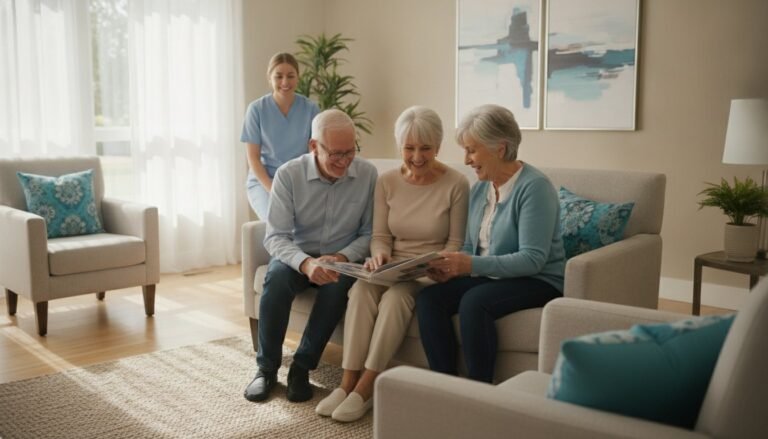
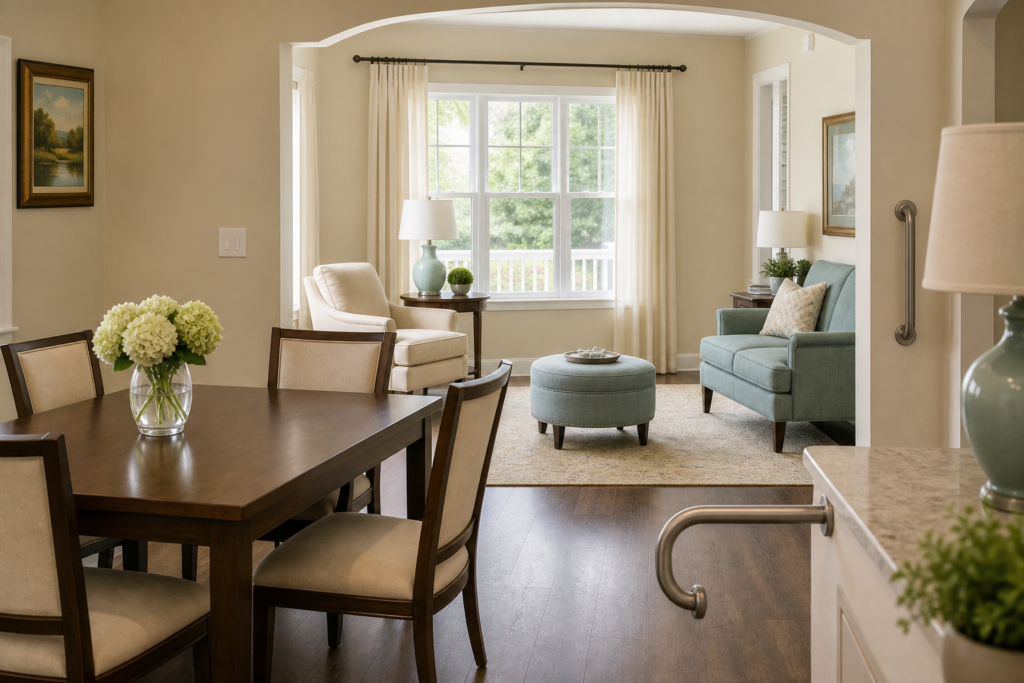
When families search for a senior home near me in Lawrenceville, they are often comparing several types of care, not one specific kind of residence. Start by identifying the setting, verifying its license, and comparing the practical help your loved one needs each day. Comfort Cove Senior Living is a licensed Georgia Personal Care Home, not an assisted living community or nursing home.
What does senior home near me mean?
The phrase senior home near me may refer to a licensed Personal Care Home, an assisted living community, a nursing home, or a smaller residential setting that provides help with everyday activities. These categories are not interchangeable in Georgia.
A Georgia Personal Care Home provides housing, food service, and one or more personal services for two or more unrelated adults. Those services may include help with bathing, dressing, eating, grooming, toileting, ambulation, transfers, and medication assistance. The Georgia Personal Care Home rules provide the formal definitions and requirements.
Georgia uses a separate licensing category for assisted living communities. Under the state’s rules, an assisted living community is a personal care home serving 25 or more residents that is licensed to provide assisted living care. A nursing home is a different type of setting designed for different levels of clinical and skilled care.
That distinction matters when you compare searches such as assisted senior living near me, private assisted living near me, and personal care home near me. Search language can be useful for finding options, but it should not be treated as a facility’s legal classification.
Begin with licensing and verification
Before comparing décor, menus, or room styles, confirm that the home is licensed for the type of care it advertises. The Georgia Department of Community Health oversees Personal Care Homes through its Healthcare Facility Regulation Division, including compliance and complaint surveys. You can use the state’s GaMap2Care facility search to review facility listings, license information, inspection or survey reports, applicable rules, and complaint-filing information.
Licensure is an important baseline, but it is not a guarantee that a residence will be the right fit for every person. A license indicates regulatory authorization and oversight. Families should still observe staffing, cleanliness, communication, daily routines, resident interactions, and the home’s ability to meet changing needs.
Questions to ask during verification
- Does the legal name and address match the home you are visiting?
- Is the residence licensed as the type of setting it describes?
- Does the licensed capacity make sense for the size of the home?
- What do recent inspection findings and corrective actions show?
- Does the written agreement match the services and policies discussed during the tour?
Look closely at staffing and overnight coverage
Twenty-four-hour care means more than having a telephone number available at all times. Ask who is physically present overnight, whether that person provides direct care, and how the home responds when a resident needs help getting up, using the bathroom, transferring, or responding to an unexpected problem.
Georgia rules require staffing based on residents’ needs and require a responsible staff person, administrator, or on-site manager to be present 24 hours a day. The rules also require at least one staff person per occupied floor and additional staffing when residents’ ongoing care or safety needs require it. Review the Georgia Department of Community Health guidance for Personal Care Homes for more information.
During a visit, ask how many residents are assigned to each caregiver on day and night shifts. Ask how call-outs are covered and whether cooks, maintenance workers, outside sitters, hospice personnel, or agency staff are included in staffing descriptions. Workers who do not provide direct care should not be presented as direct-care staffing.
Match services to daily needs
The most useful comparison is not simply which home looks nicest. It is whether the staff can reliably support the specific tasks your loved one needs today and may need soon.
Activities of daily living
Ask how staff help with bathing, grooming, dressing, toileting, eating, laundry, personal-space care, appointments, and recreation. Comfort Cove provides personal care and help with activities of daily living, but families should discuss the exact level of assistance needed before making a decision.
Mobility and transfers
If your family member uses a walker, wheelchair, or other mobility device, ask how the home handles standing, walking, bed-to-chair transfers, and nighttime assistance. Confirm whether transfer needs are assessed before move-in, whether two-person transfers or mechanical lifts are accepted, and what happens if mobility declines.
Do not assume that every Personal Care Home can safely meet every mobility or medical need. The admission agreement should explain assessment, ongoing care expectations, and what may happen if a resident needs a different level of service. A physician, therapist, or other qualified professional may also need to help evaluate an individual’s care needs.
Medication support
Medication support can mean reminders, supervision, assistance with self-administration, or another arrangement allowed by the home’s policies and authorization. Ask which staff members handle medications, how doses are documented, who obtains and refills prescriptions, how changes are communicated, and what happens after a missed dose.
Do not assume that medication support is the same as nursing care. The written admission agreement should clearly describe the level of medication assistance available and any packaging requirements.
Compare meals, rooms, and everyday comfort
Food and living arrangements affect quality of life, so include them in your visit rather than treating them as minor details. Comfort Cove offers home-cooked meals and private or shared suites. Ask how those features work in practice.
- Are meals prepared on-site, and can families review sample menus?
- Can the home accommodate allergies, texture changes, cultural preferences, or physician-ordered diets?
- Is help with eating available when needed?
- Are snacks and fluids available between meals?
- What are the differences between private and shared suites?
- How accessible are bathrooms, storage areas, and common spaces?
- What are the rules for visitors, personal furnishings, and room changes?
If privacy is a priority, a search for private assisted living near me may lead you to homes offering private rooms or suites. Still, ask about the residence’s actual license and agreement rather than relying on search terminology. Review all charges, additional-fee services, refund policies, transportation arrangements, medication policies, and transfer or discharge procedures before signing.
Consider location in practical terms
For families comparing senior care in Lawrenceville GA, location is about more than distance on a map. A home near the Mall of Georgia may be convenient, but the better question is whether relatives can visit regularly and participate in care decisions.
Consider travel time from the primary family caregiver’s home, traffic during likely visiting hours, parking and building access, proximity to relatives throughout Gwinnett County, and transportation for medical appointments, shopping, recreation, and rehabilitation. Ask whether transportation is included, arranged separately, or available for reimbursement. Emergency transportation arrangements should also be clear.
Families searching for senior care near the Mall of Georgia or a personal care home in Gwinnett County can use location as a practical filter, then compare the home’s care model and fit. Our care options page can help you understand the services to discuss, while Our Home offers another way to learn about the setting before scheduling a visit.
A simple visit checklist
Bring this checklist to each tour and write down specific answers rather than general impressions:
- License and inspection information verified through the state
- Overnight staff and direct-care coverage explained
- ADL, mobility, transfer, and medication needs reviewed
- Meal options and special-diet policies discussed
- Private or shared room details understood
- Transportation and emergency procedures explained
- All recurring and additional fees provided in writing
- Family communication and care-plan updates explained
- Process for changing needs or transferring to another setting understood
Frequently asked questions
Is Comfort Cove an assisted living community?
No. Comfort Cove Senior Living is a licensed Georgia Personal Care Home. It is not an assisted living community or a nursing home. Families should compare the home’s licensed classification with their loved one’s care needs.
Does a Personal Care Home provide 24-hour care?
Personal Care Homes must meet applicable staffing and supervision requirements, including having a responsible staff person on the premises around the clock. Ask each home who is physically present overnight and what direct-care help is available.
Can a Personal Care Home help with transfers?
Some homes provide mobility and transfer assistance, but the level of help varies. Ask about walkers, wheelchairs, two-person transfers, mechanical lifts, nighttime needs, and what happens if mobility changes.
What should I bring to a tour?
Bring a current list of medications, an outline of daily assistance needs, mobility information, dietary concerns, questions about room preferences, and any information about appointments or transportation. Do not share sensitive medical information unless the appropriate family member and professionals are involved.
How can I learn whether Comfort Cove may be a fit?
Review the services available, consider your loved one’s current needs, and contact Comfort Cove to ask questions or schedule a tour. A conversation and in-person visit can help your family compare expectations with the home’s actual routines.
Sources
- dch.georgia.gov
- GA R&R – GAC – Subject 111-8-63 RULES AND REGULATIONS FOR ASSISTED LIVING COMMUNITIES
- Personal Care Homes | Georgia Department of Community Health
- GaMap2Care®-Find a Facility | Georgia Department of Community Health