
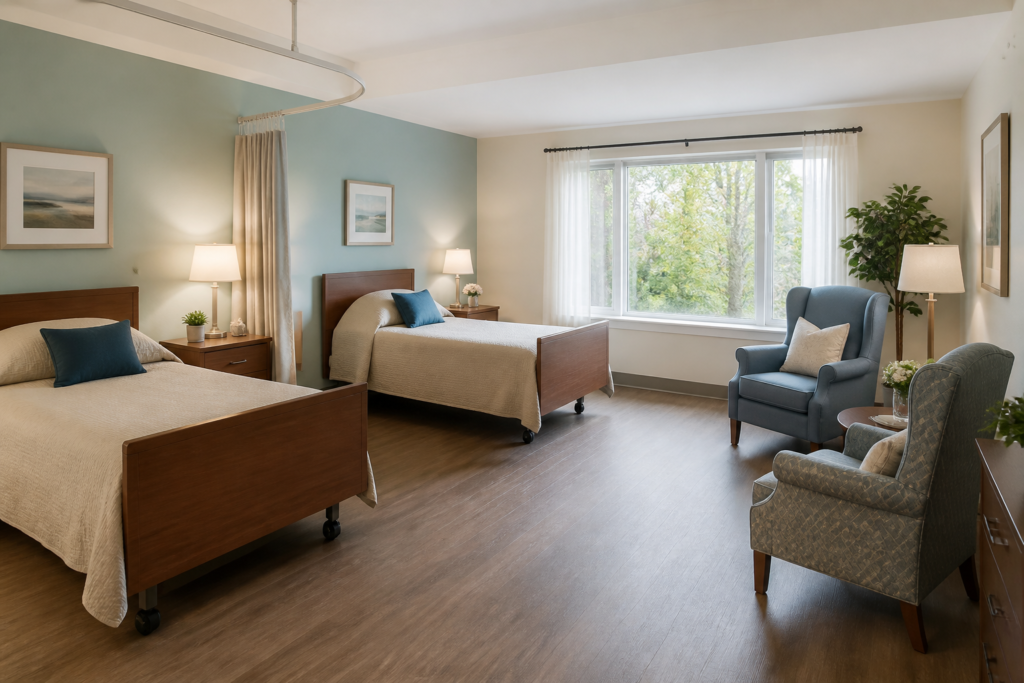
Neither a private nor a shared suite is automatically the better choice for every older adult. The right arrangement depends on your loved one’s preferences, comfort with a roommate, sleep and daily routines, care needs, social goals, and budget. Compare the actual room, services, policies, and total monthly cost before making a decision.
What is the difference between a private and shared suite?
A private suite generally gives one resident more control over personal space, quiet, visitors, belongings, and daily routines. A shared suite or room places two or more residents in the same sleeping or private living area, while dining rooms, living rooms, activity areas, and outdoor spaces may be shared by everyone in the home.
The word “suite” can mean different things from one personal care home to another. During a tour, ask whether the space includes a private bathroom, sitting area, storage, or simply a bedroom. Ask to see the exact room being offered rather than relying only on a floor plan or brochure.
In Georgia, residents of licensed personal care homes have rights related to privacy, personal belongings, private communication, dignity, and significant choices about life in the home. The state’s personal care home regulations also address sleeping and private living areas, occupancy, windows, doors, common areas, and residents’ functional needs.
When a private suite may be a good fit
A private room may suit an older adult who values quiet, personal control, or uninterrupted rest. It can also make it easier to arrange belongings, receive family visitors, and follow a preferred schedule without negotiating every part of the room with a roommate.
Consider a private option if your loved one:
- Is easily overstimulated by noise, lights, or activity.
- Has a different sleep schedule from most residents.
- Feels strongly about privacy during dressing, personal care, or family visits.
- Wants more room for clothing, photographs, or familiar furnishings.
- May become confused or distressed by another person’s nighttime movements or belongings.
A private room does not mean complete solitude. Residents may still eat meals, participate in activities, and spend time in common areas. If companionship is important, evaluate how the home supports social connection rather than assuming a private room will lead to isolation.
When a shared suite may be a good fit
Sharing a room may appeal to someone who enjoys regular companionship or feels reassured by having another person nearby. It may also be a more budget-conscious option, depending on the home’s rates and the services included. However, sharing a room does not guarantee friendship, and living alone does not automatically cause loneliness.
The National Institute on Aging distinguishes social isolation, which involves limited social contact, from loneliness, which is the distressing feeling of being alone or disconnected. Both can affect older adults, so families should look at the whole social environment: meals, activities, common areas, visiting practices, and staff engagement.
A shared suite may be worth considering if your loved one:
- Enjoys conversation and having another person nearby.
- Feels uneasy sleeping alone.
- Is comfortable compromising about lights, television, visitors, and room routines.
- Would rather spend available funds on care services or other priorities.
Roommate compatibility matters
A roommate’s habits can affect rest, comfort, and the overall experience. Ask how the home evaluates compatibility and whether residents or families have a voice in the process. Important factors include:
- Usual bedtime and wake-up time
- Snoring, television, music, or other nighttime noise
- Frequency of nighttime waking
- Mobility and transfer needs
- Communication style and personal boundaries
- Cognitive changes, confusion, agitation, or wandering behaviors
- Visitors, personal-care routines, and use of shared storage
There is no universal room arrangement for someone with dementia, nighttime confusion, or behavioral symptoms. The family and care team should consider the individual’s safety, comfort, sleep, supervision needs, and response to the environment. Ask what happens if compatibility becomes a concern, a roommate moves out, or either resident’s care needs change.
Compare cost and services—not just the room rate
Private rooms often cost more than shared rooms, but the difference varies by provider. Request a written fee schedule for both options and ask whether care charges are separate from room and board. According to the Administration for Community Living, long-term-care costs vary by location, provider, type and duration of care, and the services included.
Ask whether the quoted monthly rate includes or excludes:
- Help with bathing, dressing, grooming, toileting, and other activities of daily living
- Mobility or transfer assistance
- Medication support
- Incontinence care or related supplies
- Meals, housekeeping, laundry, and personal supplies
- Move-in, administrative, or community fees
- Room changes, additional care, or a change in roommate status
Medicare generally does not pay for most long-term care or non-medical assistance with activities of daily living. Medicaid support depends on eligibility, state rules, and the specific program, and room and board may be treated differently from covered services. Review payment questions with the home, an elder-law attorney, or a qualified benefits counselor. The Medicare long-term-care coverage guidance can help families understand the limits of Medicare.
Evaluate space, privacy, and accessibility during a tour
Do not judge a room only by its size. Picture how your loved one will use it at different times of day. Is there enough clearance for a walker or wheelchair? Can staff assist with transfers without crowding the resident or roommate? Is personal storage adequate? Can family members visit comfortably?
Also ask how privacy is maintained during dressing, bathing, toileting, medication support, and personal-care assistance. In a shared room, curtains or screens may provide some separation, but ask how they are used in practice and whether staff can accommodate private conversations.
Georgia’s Department of Community Health explains that its Personal Care Home Program licenses and monitors personal care homes. Families can review the state’s personal care home information and ask a provider to explain its license and policies. Regulatory requirements are a baseline; they do not replace an in-person assessment of whether a particular room suits your loved one.
Questions to ask before choosing
- What exactly is included in the private and shared room rates?
- Are care, medication support, supplies, or incontinence assistance billed separately?
- How are roommates matched?
- Can the resident or family request a room or roommate change?
- What happens if a roommate leaves or the resident’s needs change?
- How are nighttime disruptions, wandering, or repeated waking handled?
- How much furniture, storage, and personal décor can the resident bring?
- How does staff preserve privacy in a shared room?
- Where can family members visit privately?
- Is the agreement clear about deposits, additional charges, and rate changes?
Private or shared: making the decision
Start with your loved one’s preferences, not with assumptions about what families usually choose. If possible, include the older adult in touring rooms, discussing roommates, and identifying non-negotiables. Consider a short list of priorities such as uninterrupted sleep, private family visits, companionship, easy staff access, or keeping monthly costs manageable.
At Comfort Cove Senior Living, a licensed personal care home in Lawrenceville near the Mall of Georgia, families can ask about private and shared suites alongside personal care, activities of daily living, mobility and transfer assistance, medication support, meals, and daily routines. You can explore the home’s living environment, review care options, or schedule a conversation or tour to discuss what may fit your loved one.
Frequently asked questions
Is a private suite always better than a shared suite?
No. A private suite may offer more quiet and privacy, while a shared suite may provide companionship or help manage costs. The best option depends on the resident’s preferences, routines, care needs, and comfort with a roommate.
Does a shared room prevent loneliness?
Not necessarily. A roommate may provide companionship, but meaningful connection also depends on relationships, activities, meals, visitors, and staff engagement. Ask how the home supports social participation throughout the day.
What if my loved one cannot sleep with a roommate?
Ask the home how it handles nighttime disruptions and whether a room change is possible. Confirm whether a change affects the monthly rate and whether the request is addressed through a written policy.
What should families compare besides rent?
Compare care fees, medication support, mobility assistance, supplies, meals, housekeeping, deposits, room-change policies, and any charges that may increase as needs change. Request the details in writing.
How can we know which option is safe?
Tour the actual room and consider walking space, transfer access, privacy, lighting, emergency access, and staff response. For complex medical, cognitive, or behavioral concerns, discuss the choice with the resident’s healthcare professionals and the personal care home’s care team.
Sources
- GA R&R – GAC – Subject 111-8-62 PERSONAL CARE HOMES
- Loneliness and Social Isolation — Tips for Staying Connected | National Institute on Aging
- Personal Care Homes | Georgia Department of Community Health
- Costs of Care | ACL Administration for Community Living
- Long Term Care Coverage
- Health Effects of Social Isolation and Loneliness | Social Connection | CDC