Yes, VA Aid and Attendance may help an eligible Veteran or surviving spouse manage the cost of assisted living or personal care in Georgia. It is generally an increased payment added to a VA pension, not a benefit paid directly to a facility. Eligibility depends on military service, financial need, age or disability, and the need for regular assistance with daily activities.
What is VA Aid and Attendance?
VA Aid and Attendance, often called A&A, is an enhanced pension benefit for Veterans and eligible survivors who need regular help from another person. This may include assistance with bathing, dressing, feeding, toileting, transferring, or protection from hazards in the daily environment. The VA explains Aid and Attendance as an additional payment available to people who first qualify for a needs-based VA pension.
That distinction matters. A&A is not usually a separate program that pays an assisted-living community directly. If approved, the benefit is paid to the claimant, who may then use it toward eligible living and care expenses.
A&A is also different from VA disability compensation. Pension eligibility generally considers wartime service, age or disability, income, and net worth. Disability compensation is based on a service-connected condition and follows different rules. The VA provides an overview of the differences between pension and disability compensation.
Who may qualify?
The VA makes the final eligibility decision. In general, a Veteran applying for Veterans Pension must have a discharge that was not dishonorable, meet the VA’s wartime-service requirements, and meet income and net-worth requirements. The Veteran must also generally be at least 65, permanently and totally disabled, receiving Social Security Disability Insurance or Supplemental Security Income, or living in a nursing home because of a disability.
For many Veterans who began active duty after September 7, 1980, the VA generally requires at least 24 months of active duty, or the full period for which the Veteran was called, with at least one day during a recognized wartime period. There are exceptions and different rules for some service histories, so families should review the VA pension eligibility requirements rather than relying on a general summary.
Recognized wartime periods include World War II, the Korean conflict, the Vietnam era, and the Gulf War. A surviving spouse may also qualify for Survivors Pension and an increased amount for A&A if the spouse meets the applicable service, relationship, financial, and care requirements. More information is available from the VA’s page about Survivors Pension.
How much can A&A provide?
For the rate year beginning December 1, 2025, the VA lists these maximum annual pension rates for Veterans receiving A&A:
- Veteran with no dependents: $29,093
- Veteran with one dependent: $34,488
- Two married Veterans, both eligible for A&A: $46,143
These are maximum annual pension amounts, not guaranteed payments. The actual benefit generally depends on the applicable maximum rate and the claimant’s countable income after allowable deductions. Rates can change annually. The VA’s current pension rates should be checked before making financial plans.
The VA’s net-worth limit for the period from December 1, 2025, through November 30, 2026, is $163,699. The VA evaluates assets and income under its pension rules, and a family’s circumstances can affect the result. A benefits counselor, accredited Veterans Service Organization representative, or qualified attorney can help explain how the rules may apply to an individual situation.
Can assisted-living expenses count?
Unreimbursed medical expenses can affect how much income the VA counts when determining pension eligibility and the payment amount. Certain care-facility expenses, home health services, nursing-home care, and related expenses may be reportable.
Federal regulation 38 C.F.R. § 3.278 addresses deductible medical expenses. For a care facility other than a nursing home, the facility generally must provide health care or custodial care, be staffed 24 hours a day with care providers, and be licensed when state law requires licensing.
Under the regulation, custodial care can include regular assistance with two or more activities of daily living, or supervision required because of a physical, mental, developmental, or cognitive disorder. Listed activities include bathing or showering, dressing, eating, toileting, transferring, and ambulating.
Room and meals are not automatically treated the same as personal care. They may qualify as part of a medical expense in certain circumstances, such as when the facility provides or arranges health or custodial care, or when a qualified medical professional states that the individual must live there to receive needed care. The specific facts and documentation matter.
Georgia-specific questions to ask a personal care home
Georgia regulates personal care homes through the Department of Community Health. The state describes a personal care home as a residence providing or arranging housing, food service, and one or more personal services for two or more unrelated adults. Georgia also uses the term assisted living community for a personal care home serving 25 or more residents that is licensed to provide assisted-living care. Families can review state information about Georgia personal care homes and use the state’s GaMap2Care system to verify licensing and inspection information.
When comparing a Georgia personal care home or assisted-living community, ask:
- What is the facility’s current Georgia license status?
- What personal care, medication support, mobility assistance, or supervision is included?
- Is care provided or arranged by the facility?
- Are care providers available around the clock?
- Does the monthly agreement separate room, meals, personal care, medication support, and other services?
- Can the facility provide itemized statements or complete applicable VA documentation?
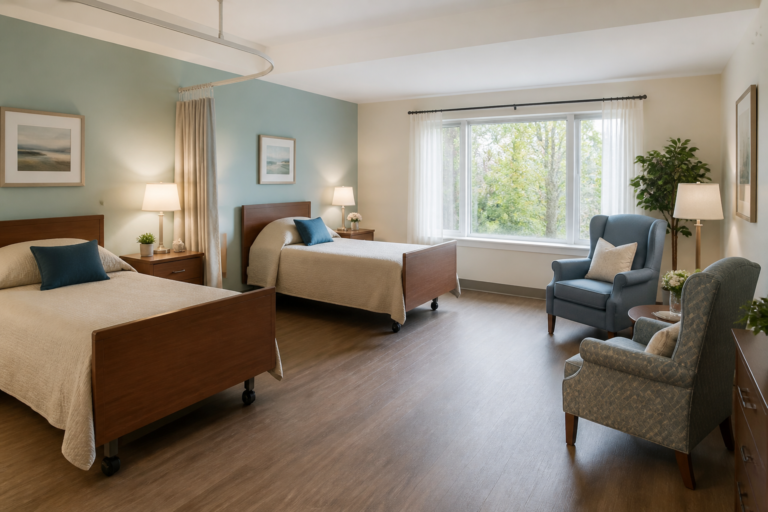
Comfort Cove Senior Living is a licensed personal care home in Lawrenceville, near the Mall of Georgia, serving families in Gwinnett County. Its services include 24/7 personal care, assistance with activities of daily living, mobility and transfer support, medication support, home-cooked meals, and private or shared suites. Families considering Comfort Cove should discuss their specific care needs and ask what documentation may be available for a benefits application.
You can learn more about Comfort Cove’s services, review care options, or schedule a conversation or tour as part of your comparison process.
How to apply for VA Aid and Attendance
A wartime Veteran generally applies for Veterans Pension using VA Form 21P-527EZ or through the VA’s online application process. Applicants should gather information about military service, household income, assets, dependents, and unreimbursed medical expenses.
Supporting documents may include:
- Military discharge or service records
- Income and asset information
- Medical records or a medical statement describing the need for assistance
- VA Form 21-2680, Examination for Housebound Status or Permanent Need for Regular Aid and Attendance
- VA Form 21P-8416, Medical Expense Report
- Facility statements, contracts, or worksheets describing care-related charges
The VA provides information about submitting medical expenses through its Medical Expense Report guidance. Keep copies of everything submitted, and ask the facility for clear, itemized records. Claimants may apply online, by mail, in person, or with assistance from an accredited attorney, claims agent, or Veterans Service Organization representative.
Frequently asked questions
Does VA Aid and Attendance pay the assisted-living facility directly?
Generally, no. A&A is usually an increased pension payment made to the eligible claimant. The claimant can use the payment toward care and living costs, subject to the applicable VA rules.
Can a surviving spouse receive Aid and Attendance?
An eligible, generally unremarried surviving spouse of a wartime Veteran may qualify for Survivors Pension with an A&A increase. Income, net worth, relationship, service, and care requirements all apply.
Are all assisted-living charges eligible medical expenses?
No. The VA distinguishes ordinary room and board from expenses connected with health or custodial care. The facility’s services, staffing, licensing, contract, and the claimant’s care needs can affect how expenses are treated.
Can a personal care home in Georgia help with an A&A application?
A facility may be able to provide care descriptions, contracts, and itemized payment statements, but it does not determine eligibility. The VA makes the decision. Families should verify documentation with the facility and seek advice from an accredited benefits professional for individual questions.
Important limitations
VA pension and Aid and Attendance rules are detailed and can change. This article is general educational information, not legal, financial, tax, or benefits advice, and it cannot predict whether a particular claim will be approved. Before choosing a care setting or relying on a projected benefit, confirm current requirements with the VA or an accredited representative and verify the facility’s current Georgia licensing information.
Sources
- Aid & Attendance and Housebound – Pension
- Eligibility For Veterans Pension | Veterans Affairs
- How Are Pension Benefits And Disability Compensation Different? | Veterans Affairs
- Survivors Pension | Veterans Affairs
- Current Pension Rates For Veterans | Veterans Affairs
- Submit Medical Expenses To Support A Pension Or Parents’ DIC Claim | Veterans Affairs