
You’re sitting at your desk, but your mind is miles away, wondering if the silence from your mom’s house means she’s napping or if she’s had another fall. This heavy, constant weight is a reality for many Georgia families who find themselves caught between deep love and growing exhaustion. You want to honor your parent’s history and independence, yet the physical and emotional toll of being a primary caregiver while managing your own life is becoming unsustainable. It’s natural to feel a sense of guilt when considering a move, but what if this transition was actually an invitation to a more vibrant, secure chapter?
We understand that recognizing the signs parent needs senior care is one of the most delicate journeys you’ll ever take. This guide is designed to help you distinguish between typical aging and the indicators that it’s time to seek a supportive environment. You’ll discover how to move past the worry of accidents and isolation toward a life of peace and social engagement. We’ll walk through the physical, emotional, and safety markers that suggest a boutique, home-like setting could be the key to reclaiming your relationship and your parent’s joy.
Key Takeaways
- Learn how to identify subtle emotional shifts, such as withdrawing from lifelong hobbies, that signal a departure from your parent’s vibrant personality.
- Discover the “Kitchen Test” and other household red flags that indicate when a once-tidy home environment has become a safety risk.
- Recognize the physical signs parent needs senior care, including unreported minor falls or newfound difficulty navigating different floor levels.
- Follow a practical, two-step assessment checklist to evaluate your loved one’s daily needs through holistic home walkthroughs and social engagement tracking.
- Explore the benefits of small-group senior living in Georgia, where personalized attention and mobility support help residents reclaim their independence and joy.
The Subtle Shift: Recognizing Early Emotional and Behavioral Changes
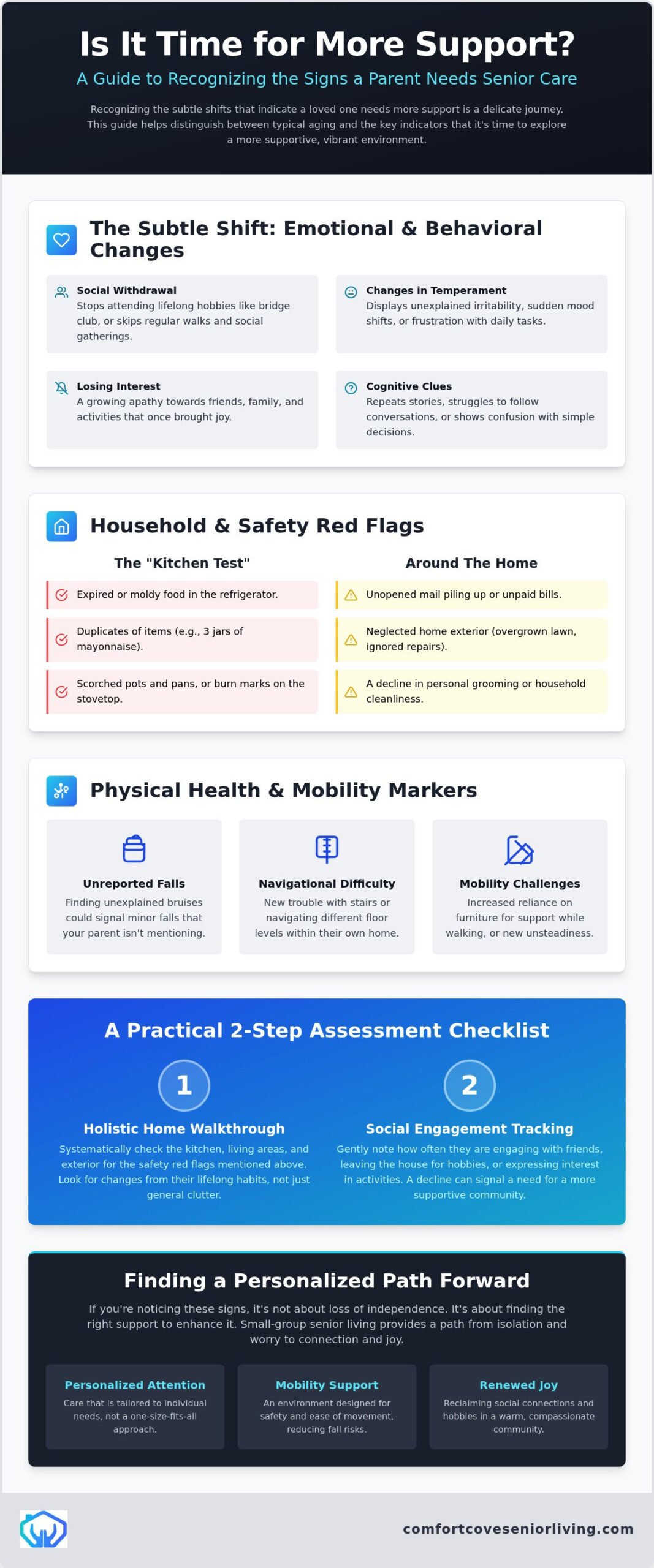
The “subtle shift” isn’t a sudden storm; it’s more like a quiet change in the tide. For many Georgia families, the first indicators aren’t medical emergencies. Instead, you might notice your parent is just different. They might stop attending their weekly bridge club in Johns Creek or skip the morning walks they used to love in Lawrenceville. This departure from their lifelong personality is often one of the most poignant signs parent needs senior care. While we often expect aging to bring a slower pace, a total withdrawal from joy isn’t a requirement of getting older.
Distinguishing between normal aging and care-requiring changes is vital for your peace of mind. Forgetting where the keys are is common; forgetting what the keys are for is a different matter. When a parent develops deep anxiety about driving to the grocery store or navigating their local community, their world begins to shrink. This isolation can lead to a decline in mental health that professional support can actually reverse. Understanding What is Assisted Living can help you see how modern care environments focus on social connection rather than just clinical oversight. It’s about moving from a life of limitation to one of supported vitality.
Changes in Temperament and Social Engagement
Have family dinners started to feel strained? You might notice unexplained irritability or sudden mood shifts that weren’t there before. Often, this isn’t anger at you; it’s frustration with a world that feels increasingly difficult to manage alone. When a parent loses interest in seeing friends, they lose a piece of their identity. We believe in a perspective where social engagement isn’t just an activity. It’s a way to restore dignity. Transitioning to a spirited, small-group environment allows them to trade the exhaustion of isolation for the warmth of meaningful connection. This is the essence of quiet luxury: the freedom to be oneself without the burden of household management.
Cognitive Clues and Decision-Making
The home environment often hides cognitive struggles until they become undeniable. You might find stacks of unopened mail or confusion regarding simple bill payments that were once handled with ease. Perhaps they repeat the same story three times in a single hour or struggle to follow the thread of a conversation. These are more than just “senior moments.” Functional cognitive decline is defined as a persistent decrease in mental clarity that interferes with a person’s ability to safely and independently manage the essential tasks of daily life. Identifying these signs parent needs senior care early allows for a transition that feels like an invitation to a more secure and joyful chapter.
Safety and Household Red Flags: When the Home Environment Becomes a Risk
While emotional changes are often internal, a parent’s home environment frequently tells the most visible story. It’s easy to overlook a dusty shelf or a cluttered table, but when these patterns represent a departure from their lifelong habits, they become significant. Identifying the signs parent needs senior care often begins with a simple walk through the rooms they’ve lived in for decades. A home that once felt like a sanctuary can slowly transform into a source of hidden risks when the demands of maintenance outpace a person’s physical or cognitive energy.
One of the most effective ways to assess safety is through the “Kitchen Test.” Open the refrigerator and look for expired milk or moldy produce. You might find three jars of the same mayonnaise because they forgot they already had it. Look at the cookware; scorched pans or burner marks on the stovetop are serious fire hazards that suggest a parent is forgetting to turn off the heat. If you notice high-end appliances sitting unused, it might be because the sequence of buttons has become confusing. These aren’t just household chores; they are indicators of nutritional health and physical safety.
The exterior of the home provides clues as well. In beautiful Georgia communities like Buford or Alpharetta, curb appeal is often a point of pride. If the lawn is suddenly overgrown, the mail is spilling out of the box, or simple repairs are being ignored, the burden of homeownership has likely become too heavy. Similarly, a growing stack of unopened mail on the dining table is a major red flag. Unpaid bills or ignored correspondence can lead to utility shut-offs or financial complications, signaling that the cognitive load of managing a household is no longer manageable alone.
Hygiene and Personal Care Neglect
A change in grooming habits is a sensitive but clear indicator that a parent needs more support. You might notice they are wearing the same outfit for several days in a row or that their hair appears unwashed. Often, this isn’t a lack of desire to be clean; it’s a fear of the slippery bathtub or the physical exhaustion of doing laundry. In a boutique home environment, personalized care helps restore a sense of pride. When the struggle of daily tasks is removed, residents often find a renewed interest in their appearance and self-worth.
The Hidden Dangers of Home Maintenance
For many seniors, “aging in place” sounds ideal until the reality of a multi-level home sets in. Stairs are more than an inconvenience; they are a primary cause of falls that can lead to a loss of independence. Large properties can also lead to dangerous isolation if a parent stops navigating certain parts of the house. Transitioning to a worry-free lifestyle where maintenance is handled allows your loved one to focus on joy rather than repairs. Exploring personalized care options in a smaller, more intimate setting can turn a house that feels like a burden back into a home that feels like a sanctuary.
Physical Health and Mobility: Understanding the Need for Professional Support
While emotional and household changes are often subtle, physical shifts usually feel more urgent. You might notice unexplained bruising on your parent’s arms or legs. Frequently, these are the silent marks of “minor” falls that go unreported because they don’t want to worry you or lose their independence. Difficulty standing from a favorite armchair or a sudden hesitation when approaching a staircase are significant signs parent needs senior care. These changes aren’t just physical hurdles; they’re signals that the current living environment may no longer support their safety or their dignity.
Nutrition and medication also play a vital role in physical vitality. Have you noticed significant weight loss or gain? This often stems from poor nutrition or the confusion of medication errors. When a parent struggles to manage their health alone, their physical strength can decline rapidly. We believe that professional support should feel like a partnership that restores their energy. It’s about moving from a state of constant physical effort to a life of supported movement and renewed spirit.
Specialized Mobility and Equipment Needs
There comes a point where “helping them up” from a chair or bed becomes a safety risk for both of you. It’s a heavy emotional and physical burden for an adult child to act as a primary mover. Specialized equipment, such as Hoyer lifts and stand-to-sit assistance, transforms this experience. These tools are instruments of grace that allow for safe movement while preventing caregiver injury. In a boutique home, this technology ensures that mobility remains a gateway to activity and social connection rather than a source of fear or strain.
Medication Management and Health Tracking
Missed doses or “double-dosing” are leading causes of emergency room visits for seniors in Georgia. Managing a complex schedule of pills is overwhelming, especially when chronic conditions require precise timing. Professional oversight ensures that every dose is taken exactly as prescribed, providing a foundation for steady health. Medication compliance is a cornerstone of senior wellness that ensures your loved one stays vibrant and engaged in their daily life. This level of care allows you to return to being a daughter or son, rather than a medical manager. It’s a transition that prioritizes their long-term health and your collective peace of mind.
The Care Assessment Checklist: Evaluating Your Parent’s Daily Needs
While a medical professional can provide a clinical overview, you possess the most valuable data of all: the lived experience of watching your parent in their natural environment. Evaluating the signs parent needs senior care is a process best handled with a blend of objective observation and deep love. To move from a place of worry to one of confident action, it’s helpful to follow a structured approach that respects your parent’s history while prioritizing their future vitality.
Your first step should be a holistic home walkthrough during a quiet, non-holiday visit. Holidays often prompt a “performance” where seniors push through exhaustion to appear well; a random Tuesday offers a much clearer picture of their daily reality. Over the next 30 days, keep a gentle log of their social engagement. Are they answering the phone with enthusiasm, or has their world narrowed to the four walls of the living room? Once you have these observations, consult with their primary physician to discuss physical limitations. This medical perspective, paired with your personal insights, creates a complete picture of their needs.
The final steps involve looking outward and inward. Take the time to interview boutique care providers in Lawrenceville or Cumming to see how a smaller, home-like setting compares to their current situation. This research empowers you to facilitate a gentle conversation about future goals and safety. Instead of focusing on what they might be “giving up,” frame the discussion around what they could gain: more energy, deeper friendships, and a life free from the stress of home maintenance.
Evaluating Activities of Daily Living (ADLs)
A vital part of your assessment is observing how your loved one manages the essential rhythms of the day. Can they bathe, dress, and prepare nutritious meals independently without a significant struggle? Physical activity is also a key indicator; without enough movement, seniors can quickly lose the muscle mass required for balance and stability. If you find they are skipping meals or neglecting personal care to save energy, it’s a clear signal that their current level of support needs an upgrade. You can learn more about Choosing the Right Senior Care Level to find the perfect fit for their unique situation.
Assessing the Social and Spiritual Connection
We often focus on physical safety, but emotional and spiritual well-being are just as critical for long-term health. Does your parent mention feeling lonely or “stuck” in their current home? If they are missing out on community events or spiritual gatherings they once cherished, their mental acuity may begin to dull. A socially active environment isn’t just about fun; it’s a vital component of cognitive health that keeps the mind sharp and the spirit bright. If you’re ready to see your loved one flourish in a community that feels like family, we invite you to explore our personalized care programs today.
Finding a Personalized Path: Why Small Group Senior Living in Georgia is Different
Once you’ve identified the signs parent needs senior care, the next chapter is about finding a place where they will truly thrive. In Gwinnett County, the choice often feels like it’s between large, anonymous buildings and intimate, small-group homes. While larger settings have their place, many families find that a boutique environment offers a sense of belonging that’s hard to replicate. These residential-style settings prioritize your parent’s history and personality. This ensures the move feels like an expansion of their life rather than a retreat from it.
The most significant benefit of this model is the high staff-to-resident ratio. In a smaller setting, caregivers aren’t just employees; they become trusted companions who understand your parent’s favorite morning routines and specific mobility needs. This personalized attention means safety is woven into the fabric of the day. It allows for a more active and spirited lifestyle. It’s a transition that celebrates agency and honors the journey of aging with grace. You’ll find that when the environment matches the individual, the result is a renewed sense of security for everyone involved.
The Boutique Experience in Lawrenceville and Buford
Families in Lawrenceville and Buford are increasingly turning toward residential-style homes because they mirror the comfort of a family environment. Instead of long, clinical corridors, residents enjoy shared living spaces that foster genuine friendships. Our approach at Comfort Cove centers on celebrating every day with honor and vibrancy. We offer personalized wellness and exercise programs tailored to individual abilities. This ensures every resident can participate in a way that feels empowering. Whether it’s a gentle morning stretch or a social gathering, the focus is always on what is possible rather than what has changed.
Taking the Next Step with Confidence
Choosing a new home for your loved one is a journey of the heart. When you’re ready to explore your options, we recommend scheduling a tour during a time when you can see the community in action. Look for a warm atmosphere where residents are engaged and the rhythm of life feels steady and peaceful. Transition anxiety is natural, but it can be greatly reduced through empathetic introductions and a slow, welcoming pace. We’re here to be your partner in this process, ensuring your parent feels seen, heard, and valued from the very first moment. We invite you to experience the Comfort Cove difference, and schedule a visit today to see how we can help your loved one reclaim their joy.
Reclaiming Peace and Vitality Together
Recognizing the signs parent needs senior care is not an admission of defeat; it’s a courageous step toward ensuring your loved one lives with the dignity and joy they deserve. By identifying subtle emotional shifts and addressing household safety risks early, you move from a state of constant worry to a supportive partnership. Transitioning to a boutique environment allows your parent to trade the isolation of a high-maintenance house for a spirited community where their well-being is celebrated every day.
At Comfort Cove, we focus on the richness of experience through high-quality personal care and active social programs. Our specialized mobility support, including the use of Hoyer lifts, ensures that every resident remains safe and active within our small-group home setting. You can return to being a supportive daughter or son while we handle the complexities of daily care. We invite you to Discover Warm, Personalized Senior Care at Comfort Cove and see how this next chapter can be the most vibrant one yet. Your family’s journey toward renewed energy and security starts with a single, hopeful conversation.
Frequently Asked Questions
Is it normal for my parent to be resistant to senior care?
Yes, it’s very common for parents to feel hesitant about this transition. Resistance often stems from a fear of losing independence or a misunderstanding of what modern care looks like. Many seniors associate a move with loss, but boutique senior living actually offers a gain in safety and social connection. It’s helpful to listen to their specific fears with empathy. Focusing on a home-like environment rather than an institution can help ease this transition and open the door to a more vibrant chapter.
What is the difference between a personal care home and assisted living in Georgia?
In Georgia, the primary difference lies in the level of medical oversight and the size of the community. Personal care homes are often smaller, residential settings that focus on personal care services and daily living support. Assisted living communities are typically larger and may offer more clinical services. For a deeper look at how these two options compare, our guide on personal care home vs assisted living in Georgia can help you navigate the key differences for 2026. Choosing a boutique personal care home allows for a more intimate, family-style atmosphere where every resident receives deeply personalized attention in a setting that feels like a real home.
How do I know if my parent needs a Hoyer lift for mobility?
You might notice your parent needs a Hoyer lift if they can no longer support their own weight during transfers from a bed or chair. This specialized equipment is essential when helping them up becomes a physical risk for you or your loved one. Using professional mobility support ensures safety and maintains resident dignity. It’s one of the clear signs parent needs senior care that includes advanced equipment to prevent caregiver injury and ensure comfortable, safe movement.
Can my parent maintain their independence in a senior living community?
Absolutely, and in many cases, their independence actually increases. When the burden of cooking, cleaning, and home maintenance is removed, seniors have more energy to focus on the things they love. Our approach prioritizes personal agency and choice. By providing just the right amount of support, we empower residents to navigate their day with confidence. They gain the freedom to be socially active and physically engaged without the constant worry of managing a household alone.
What are the signs that a parent is lonely or isolated at home?
Common indicators of isolation include a lack of interest in previous hobbies, sleeping more than usual, or neglecting personal hygiene. You might notice they stop mentioning friends from church or community groups in Lawrenceville. Isolation is often a subtle shift that impacts mental acuity and physical health. Seeing these signs parent needs senior care is an opportunity to introduce them to a spirited environment where daily social interaction and meaningful connections are part of the natural rhythm of life.
How much do personalized senior care services cost in Lawrenceville?
Costs for senior care in Georgia vary based on the level of support required and the specific setting chosen. While we don’t provide specific pricing here, industry data for 2026 indicates that assisted living in Georgia typically ranges from $4,120 to $6,350 per month. Boutique personal care homes often provide a high value by including personalized attention and mobility support within a more intimate environment. We recommend contacting local providers directly to receive a quote tailored to your parent’s unique needs.
What activities are available in small group senior homes?
Small group homes offer a variety of robust activity and exercise programs designed to keep the mind and body active. These might include gentle chair yoga, creative arts, or spirited social hours that encourage storytelling and laughter. Because the community is small, activities can be tailored to the specific interests of the residents. This personalized approach ensures that everyone feels included and celebrated, turning every day into an opportunity for growth and connection in a warm, welcoming atmosphere.
How do I start the conversation about senior living with my parent?
Start the conversation early, before a crisis occurs, and approach it with warmth and curiosity. Ask your parent about their future goals and what would make their daily life feel easier or more joyful. Use “I” statements to express your observations and feelings without being confrontational. Frame the transition as a way to enhance their lifestyle and safety. Listening more than you talk helps your loved one feel like a partner in the decision-making process.