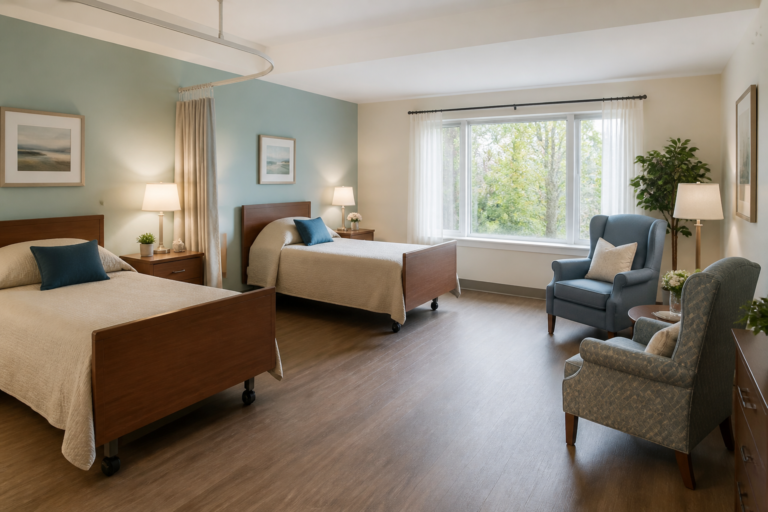

In Georgia, a personal care home and an assisted living community are related but legally distinct. An assisted living community is a personal care home licensed to provide assisted living care and serving 25 or more residents. Smaller homes may provide many of the same daily supports without holding an assisted living community license. The right choice depends on licensing, care needs, setting, services, and total cost.
Personal care home vs. assisted living: the basic distinction
Families often use “personal care” and “assisted living” interchangeably because both settings can help older adults with daily routines. In Georgia, however, the terms have specific regulatory meanings.
Under Georgia rules, a personal care home is a residence that provides or arranges housing, food service, and at least one personal service for two or more unrelated adults. Personal services may include assistance with activities of daily living, mobility, meals, supervision, and other routine support.
An assisted living community is a personal care home serving 25 or more residents that is licensed to provide assisted living care. That additional license reflects requirements related to the level and type of care the community is authorized to provide. You can review the definitions in the Georgia personal care home rules and the Georgia assisted living community rules.
In practical terms, the difference is not simply whether staff help with bathing, dressing, meals, walking, or transfers. Ask about the residence’s state license, resident capacity, authorized services, staffing, policies, and ability to support changing needs.
How the services may differ
Daily personal care
Both settings may offer help with activities of daily living, such as bathing, grooming, dressing, eating, toileting, mobility, and transfers. They may also provide meals, housekeeping, activities, supervision, and a safe residential environment.
The actual service package varies by residence. A smaller personal care home may offer a more intimate household setting, while an assisted living community may have a larger campus, more common areas, or a broader range of organized services. Neither format is automatically better; the important question is whether the setting can safely and consistently meet your family member’s needs.
Medication support is not one single service
Medication language deserves special attention during a tour. “Medication support” can mean reminders, assistance with self-administration, supervision, or medication administration. These are not necessarily the same service.
In a personal care home, appropriately trained staff may assist with or supervise a resident’s self-administration of medication, subject to applicable requirements. Georgia rules also provide for medication administration by certified medication aides in assisted living communities under specified conditions and oversight. Read the residence’s service agreement and ask exactly what staff will do, who will do it, and how changes or missed doses are handled.
For any residence you are considering, use wording that matches its actual authorization and policies. If your family member has complex medication needs, ask the prescribing clinician and the residence whether the plan is appropriate.
Care planning and changing needs
Assisted living communities must complete a needs assessment and develop an individual written care plan within 14 days of admission. Personal care homes also have care-planning obligations in particular circumstances, including when providing proxy caregiver or memory-care services. Ask how the home assesses residents before move-in, reviews needs afterward, and communicates changes to families.
A good conversation should cover mobility, falls, continence, cognition, nighttime needs, nutrition, medications, appointments, and emergency contacts. It should also explain what happens if your family member eventually needs more care than the residence can provide.
What both settings do—and do not—provide
Personal care homes and assisted living communities are residential care settings, not nursing homes. They may arrange periodic or short-term medical services, but neither category is designed to replace continuous skilled nursing care.
Georgia rules require homes and communities to address admission, resident protections, care changes, and discharge or transfer when a resident’s needs exceed the facility’s capabilities. A residence may not be able to admit or retain someone who requires continuous medical or nursing care. This does not mean a move is inevitable when needs change, but it does mean families should understand the residence’s limits before signing an agreement.
For individualized guidance about medical needs, ask the person’s physician, nurse, discharge planner, or other qualified professional. Licensing questions can be checked with the Georgia Department of Community Health’s personal care home information.
How to compare costs fairly
There is no reliable one-size-fits-all answer to whether a personal care home or assisted living community costs more. Pricing can depend on room type, location, care needs, medication services, level of mobility assistance, meals, supplies, transportation, and one-time fees. A larger building is not automatically more expensive, and a smaller home is not automatically less expensive.
Request a written, itemized estimate from each residence. Compare the monthly base rate with the likely total for your family member’s actual needs. Ask whether rates change when care needs increase and which services are billed separately.
- What is included in the monthly fee?
- Are bathing, toileting, transfers, or incontinence supplies charged separately?
- What does medication assistance or administration cost?
- Are there move-in, community, assessment, or discharge fees?
- How often are rates reviewed or adjusted?
- What happens financially if the resident needs a higher level of support?
- Which payment sources does the residence accept, and what documentation is required?
Before making a financial decision, review the admission agreement carefully and consider speaking with a qualified elder-law or financial professional about your circumstances. Benefits and payment options can depend on individual eligibility and policy terms.
A practical checklist for Lawrenceville-area families
When comparing a personal care home with an assisted living community near Lawrenceville or elsewhere in Gwinnett County, bring a current list of medications, diagnoses, mobility needs, daily routines, and questions about future care. Then verify:
- License: What type of Georgia license does the residence hold, and does it match the services being discussed?
- Capacity and setting: How many residents live there, and does the atmosphere feel comfortable and manageable?
- Staffing: Who is present during the day, overnight, weekends, and emergencies?
- Care tasks: Can staff safely assist with transfers, bathing, dressing, meals, toileting, and mobility?
- Medication procedures: Is the service a reminder, self-administration assistance, supervision, or administration?
- Emergency readiness: How are falls, illness, evacuation, and overnight changes handled?
- Care changes: How are assessments updated, and what circumstances require a transfer?
- Agreement and costs: Are all fees, services, refund policies, and discharge terms in writing?
- Daily life: Can you observe a meal, visit common areas, and speak with staff during an unscheduled or varied time of day?
How Comfort Cove fits into the decision
Comfort Cove Senior Living is a licensed personal care home in Lawrenceville, near the Mall of Georgia, serving families in Gwinnett County. Its residential services include 24/7 personal care, assistance with activities of daily living, mobility and transfer support, medication support, home-cooked meals, and private or shared suites.
Because medication and care services must match the home’s authorization and policies, families should discuss their loved one’s specific needs directly with the team. You can learn more about available services, review care options, or explore our home before arranging a conversation or tour through the contact page.
Frequently asked questions
Is assisted living the same as a personal care home in Georgia?
No. An assisted living community is a personal care home serving 25 or more residents that has been licensed to provide assisted living care. A smaller residence may be licensed as a personal care home without being an assisted living community.
Can a personal care home help with medications?
It may be able to assist with or supervise self-administration when permitted by Georgia requirements and the home’s authorization. That is different from medication administration. Ask the residence to describe its exact process in writing.
Is assisted living the same as a nursing home?
No. Assisted living and personal care homes are residential care settings. They are not intended for people who require continuous medical or nursing care. A physician or qualified care professional can help assess whether a higher level of care is needed.
Which is better for an older adult who needs help with daily activities?
There is no universal answer. Compare the person’s current needs, likely changes, preferred setting, staffing, authorized services, costs, and transfer policies. A smaller personal care home may suit someone who prefers a residential environment, while a larger assisted living community may offer different amenities or service structures.
What should I verify before choosing a residence?
Verify the license category, services included, medication procedures, staffing, emergency plans, care-assessment process, total costs, admission agreement, and rules for changing needs. If the situation involves complex medical, legal, or financial questions, seek advice from an appropriate qualified professional.
Sources
- GA R&R – GAC – Subject 111-8-63 RULES AND REGULATIONS FOR ASSISTED LIVING COMMUNITIES
- GA R&R – GAC – Subject 111-8-62 PERSONAL CARE HOMES
- Personal Care Homes