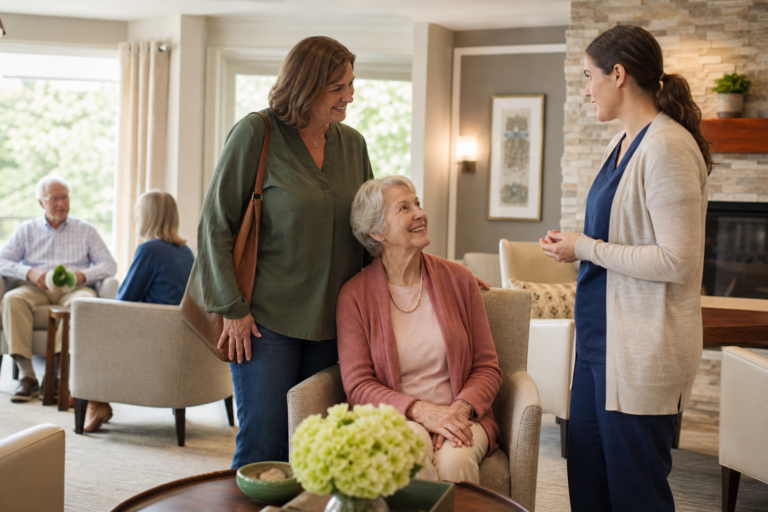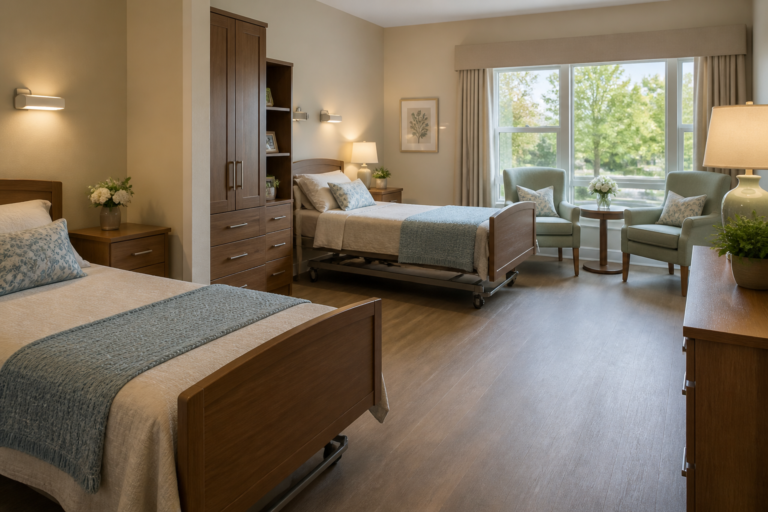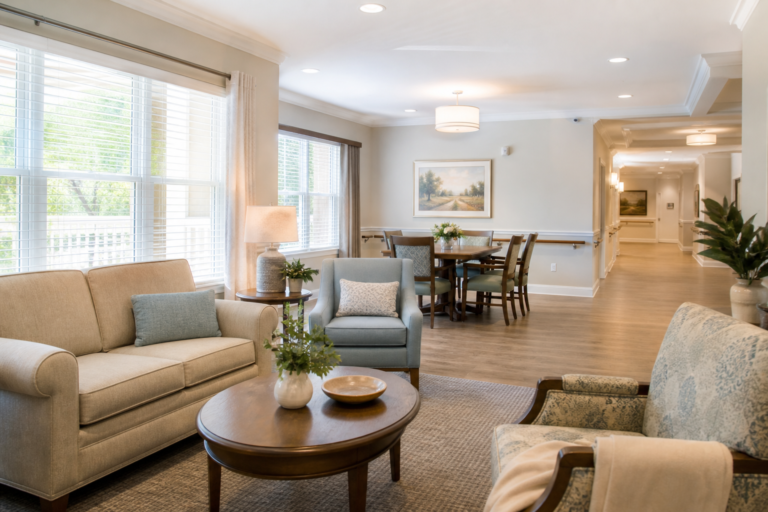
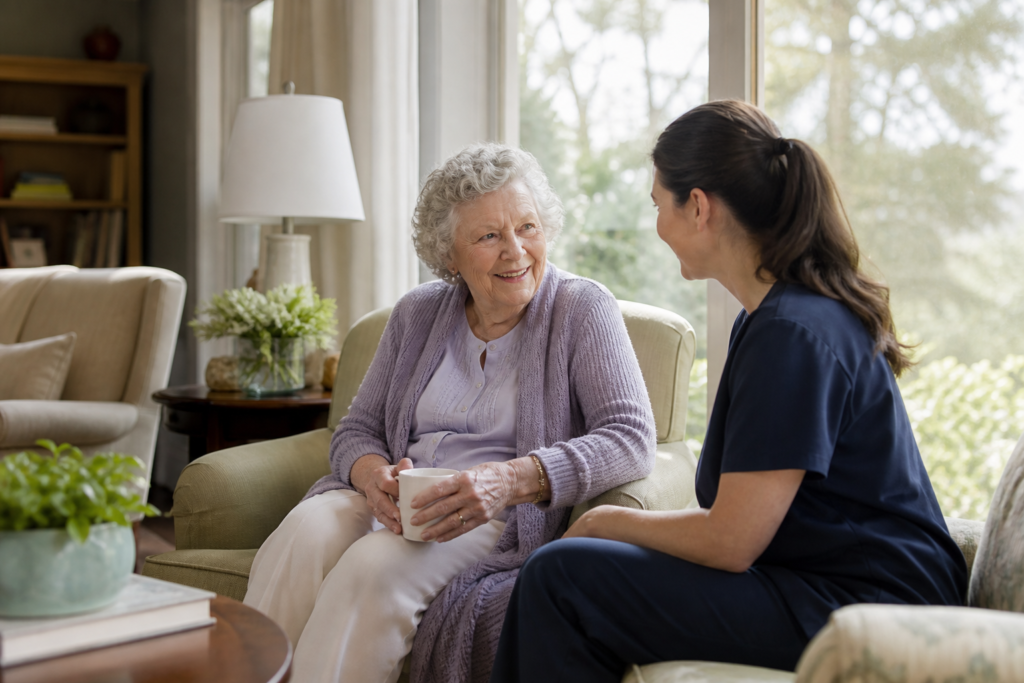
For families, 24/7 personal care generally means trained staff are available on-site day and night to supervise residents, respond to needs, and provide permitted help with daily activities, mobility, meals, and medication support. It does not necessarily mean one caregiver is assigned exclusively to one resident or that continuous skilled nursing is provided.
What 24/7 personal care means in practice
Moving a loved one into a personal care home often raises a basic but important question: What does 24/7 personal care mean when daily life is actually happening?
In a Georgia personal care home, round-the-clock care refers to ongoing staff presence and availability. Someone responsible for the home must be on the premises 24 hours a day, and at least one staff member must be present on each occupied floor. Staffing is also expected to be sufficient for residents’ health, safety, supervision, and care needs. The Georgia personal care home regulations provide the underlying requirements.
For a resident, that may mean help is available in the morning, during meals, in the evening, and if assistance is needed overnight. The amount and type of help should reflect the resident’s individual needs rather than a one-size-fits-all schedule.
What personal care may include
Personal care generally focuses on activities of daily living, sometimes called ADLs. These are routine tasks that a person may have difficulty completing safely or independently. Examples include:
- Bathing, grooming, and dressing
- Toileting and personal hygiene
- Eating or receiving assistance during meals
- Walking, ambulation, repositioning, and transfers
- Getting in and out of bed or moving between a bed and chair
- Supervision or permitted assistance with self-administered medications
The National Institute on Aging’s overview of daily living services describes similar areas of support, including bathing, dressing, grooming, using the toilet, eating, and moving around.
In everyday terms, staff might help a resident begin a morning routine, get dressed, move safely to breakfast, or prepare for bed. They may also observe changes in appearance, behavior, appetite, mobility, or general condition and communicate concerns through the home’s established process.
What families may notice during the day and night
Care is not limited to business hours. Depending on a resident’s needs and the home’s staffing practices, 24/7 personal care may involve:
- Assistance with morning and bedtime routines
- Support with bathing, dressing, grooming, and toileting
- Help with meals or eating when needed
- Mobility and transfer assistance
- Medication reminders or permitted assistance with self-administration
- Staff availability when a resident needs help during the night
- Supervision appropriate to the resident’s condition and abilities
- Communication with family members when needs or condition change, according to the home’s policies
“Available 24/7” does not mean every resident needs or receives help at every moment. Some residents may need only occasional assistance, while others may require more frequent support. A reputable home should be able to explain how it evaluates those differences and organizes staffing.
24/7 availability is not the same as one-on-one or skilled nursing care
These terms are sometimes used interchangeably, but they describe different types of service:
- 24/7 on-site personal care: Staff are present day and night and available to supervise, assist, and respond to residents’ needs.
- One-on-one care: A caregiver is dedicated exclusively to one resident for a defined period. Round-the-clock on-site staffing does not automatically provide this arrangement.
- Skilled nursing care: Clinical nursing or medical services delivered by appropriately licensed healthcare professionals. This is different from routine personal care and medication assistance.
Georgia personal care homes are not a substitute for hospitals, emergency treatment, or continuous nursing care. The Georgia Department of Community Health’s personal care home information and applicable regulations should be reviewed when a resident has complex or changing medical needs.
Personal care homes may arrange for or allow appropriately licensed outside providers to deliver services such as therapy, hospice, home health, or periodic nursing care when permitted. However, a home cannot provide services outside its authorization, and families should ask specifically what can be handled by the home and what requires an outside provider.
How medication support works
Medication assistance should be discussed carefully. It does not necessarily mean that staff are providing nursing services or administering every type of medication.
Under Georgia’s rules, trained staff may provide limited assistance with self-administered medications in permitted circumstances. This can include bringing a properly labeled medication container to the resident, opening it, placing an oral dose in the resident’s hand or another container, and helping with certain drops, inhalers, nasal sprays, patches, or topical medications. Required documentation includes a Medication Assistance Record.
The exact support available depends on the home’s authorization, staff training, the medication, and the resident’s circumstances. Ask the home to explain its medication policy rather than assuming that all medication needs are included.
Care needs should be reviewed over time
A resident’s care needs can change after an illness, fall, hospitalization, or gradual change in mobility or memory. Georgia regulations require a personal care home to assess needs at admission and update the assessment when needs change. Areas considered may include daily activities, physical care needs, medical information, cognitive or behavioral concerns, family support, and personal preferences.
That makes care planning an ongoing conversation, not a one-time decision. Families should ask how the home:
- Identifies changes in a resident’s condition or abilities
- Documents and communicates those changes
- Updates the resident’s care plan or assessment
- Involves family members in appropriate discussions
- Determines when outside services or a higher level of care may be needed
For an overview of the types of support a home may offer, families can review care options and Comfort Cove’s services. Individual needs should be discussed with the home and, when appropriate, the resident’s healthcare professionals.
Questions to ask when comparing personal care homes
A tour is an opportunity to ask about actual routines, not just broad descriptions. Consider bringing this checklist:
- Who is physically present overnight?
- How can residents request help during the night, and how quickly are requests typically answered?
- What is the staffing pattern during waking and non-waking hours?
- Which personal care tasks are included in the standard charges?
- Is mobility, walking, repositioning, and transfer assistance available?
- What medication assistance is permitted and provided?
- How are assessments completed and updated when needs change?
- What happens if a resident’s needs become more complex?
- Can outside home health, hospice, therapy, or nursing providers come to the home?
- Are additional charges applied for particular services or levels of assistance?
Georgia requires the admission agreement to identify services included in the charges and services available for an additional fee. Ask to review those details in writing before making a decision.
Frequently asked questions
Does 24/7 personal care mean someone is watching my loved one every minute?
No. It means staff are present and available around the clock, with supervision and assistance based on residents’ needs. It does not automatically mean continuous one-to-one observation.
Is overnight help included in 24/7 personal care?
Overnight staff availability is part of round-the-clock on-site coverage, but the specific response process and services included can vary. Ask who is present, how residents call for help, and what overnight assistance the home provides.
Can a personal care home provide skilled nursing?
A personal care home is not a replacement for continuous skilled nursing or hospital-level care. Some periodic services may be provided by appropriately licensed outside professionals, depending on the resident’s needs and the home’s policies.
Can staff help with medications?
They may be able to provide permitted assistance with self-administered medications, but the details depend on the medication, staff training, applicable rules, and the resident’s situation. Ask for the home’s medication policy.
What if my family member’s needs change?
Ask how the home reassesses residents, updates care plans, communicates with families, and determines whether outside services or a different care setting is appropriate. A healthcare professional can help evaluate medical needs.
A practical definition for families
24/7 personal care means trained staff are available on-site day and night to provide supervision, assistance with daily activities, mobility and transfers, meals, and permitted medication support. It does not necessarily mean one-on-one care or continuous skilled nursing.
Comfort Cove Senior Living is a licensed personal care home in Lawrenceville, near the Mall of Georgia, serving families in Gwinnett County. To understand whether the setting fits your family member’s needs, learn more about our home or schedule a tour. Bring your questions, current care information, and any guidance from the resident’s healthcare team so you can make an informed comparison.
This article provides general information and is not medical, legal, or regulatory advice. Rules, services, and a resident’s eligibility can depend on individual circumstances. Confirm current requirements with the appropriate Georgia agency and discuss health-related decisions with qualified professionals.
Sources
- GA R&R – GAC – Subject 111-8-62 PERSONAL CARE HOMES
- Services for Older Adults Living at Home | National Institute on Aging
- Personal Care Homes | Georgia Department of Community Health
- Microsoft Word – personalcarehomes July 2012.doc