Neither in-home care nor a personal care home is universally better. In-home care may suit an older adult who is safe in familiar surroundings and needs scheduled help. A personal care home may be a better fit when meals, housing, regular supervision, mobility assistance, and daily support need to be organized in one setting. The decision depends on care needs, costs, safety, preferences, and family availability.
First, clarify what “in-home care” means
In-home care is an umbrella term, and families should confirm exactly what a provider offers. Nonmedical home care can include help with bathing, dressing, toileting, transferring, mobility, meals, light housekeeping, and companionship. Home health care refers to physician-ordered skilled services such as nursing or physical, occupational, or speech therapy.
These services are not interchangeable. Medicare generally does not pay for ongoing custodial or personal care when that is the only care needed. Medicare-covered home health services also have eligibility requirements, such as being homebound and needing part-time or intermittent skilled care; Medicare does not cover 24-hour care at home. See Medicare’s home health coverage guidance for current details.
What a personal care home provides
In Georgia, a personal care home is a residential setting that provides or arranges housing, food service, and at least one personal service for two or more unrelated adults. The Georgia Department of Community Health oversees the Personal Care Home Program.
That means a personal care home is more than a caregiver visiting an existing residence. The older adult moves into a setting where housing, meals, and supportive services are organized through the home’s operating model. Depending on the residence, support may include assistance with activities of daily living, medication support, housekeeping, mobility, meals, and staff availability around the clock. Families should ask what is included rather than assume every home provides the same services.
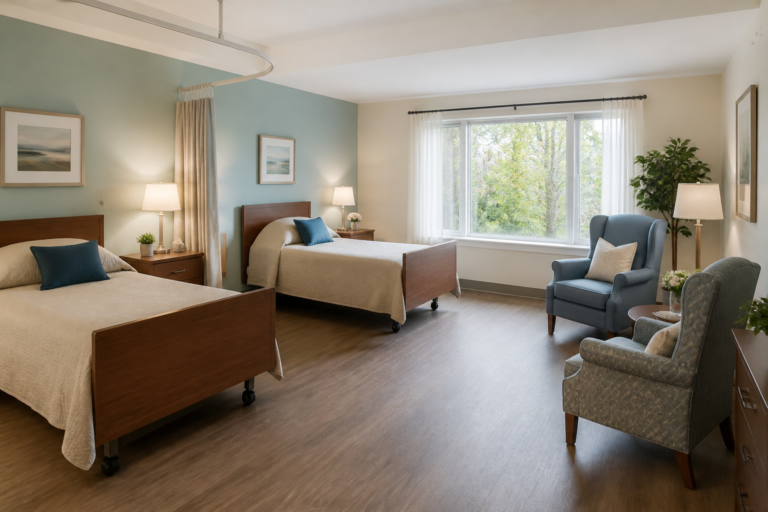
Comfort Cove Senior Living is a licensed personal care home in Lawrenceville, near the Mall of Georgia. Its services include 24/7 personal care, help with activities of daily living, mobility and transfer assistance, medication support, home-cooked meals, and private or shared suites. You can learn more through our services page and home information.
In-home care vs. personal care home: practical differences
Living arrangement
With in-home care, the older adult remains in a familiar home and neighborhood. This can preserve routines, privacy, and comfort. However, the home may need modifications, and someone still has to manage maintenance, meals, transportation, emergencies, and gaps between visits.
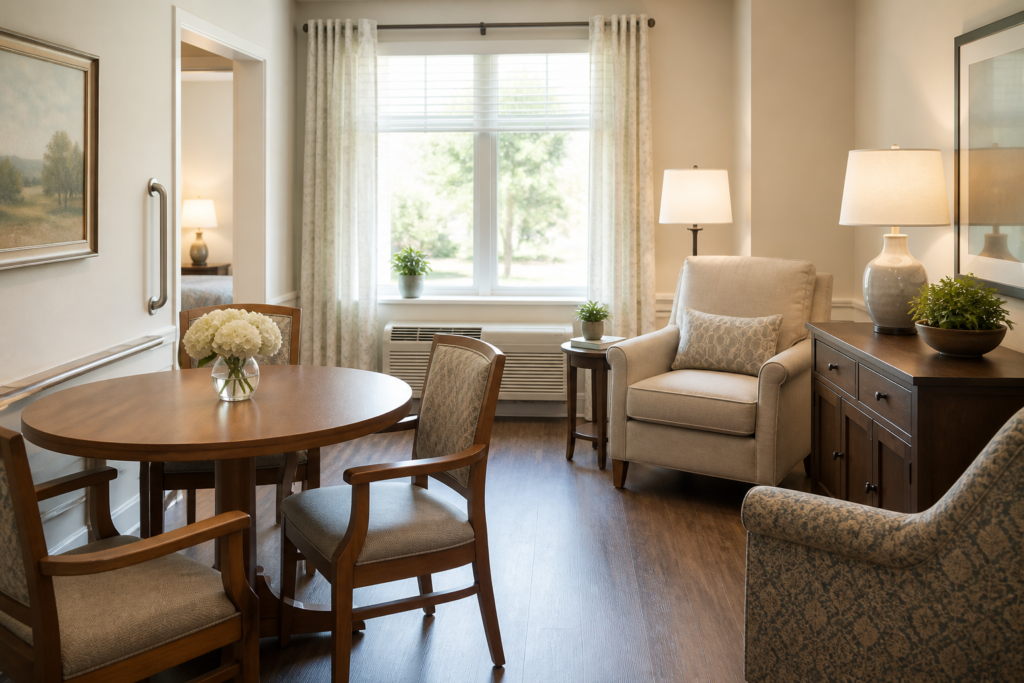
With a personal care home, the older adult moves into a residential community. A private suite may offer more privacy, while a shared suite may provide a different social and financial arrangement. Common dining and activities may also be available, depending on the home.
Coverage and supervision
In-home care is commonly arranged by hours or visits. If a person needs help only in the morning and evening, this schedule may be practical. If the person is unsafe alone at night, wanders, needs frequent transfers, or requires help throughout the day, families must price and coordinate substantially more coverage.
A personal care home organizes routine support within the residence, but families should still ask how staff coverage works, how call-outs are handled, and what happens when needs increase. “Available around the clock” does not necessarily mean one-to-one supervision every minute, so request a clear explanation of staffing and response practices.
Family responsibilities
In-home care can reduce some hands-on work without removing the family’s coordination role. Relatives may still need to schedule caregivers, cover canceled visits, manage several providers, arrange transportation, maintain the home, and respond when needs arise outside scheduled hours. The National Institute on Aging caregiving worksheet can help families map these responsibilities.
A personal care home generally takes on more day-to-day operational responsibilities, including meals and routine personal support. Families remain important advocates and should stay involved in care planning, communication, appointments, and monitoring whether the setting continues to meet the older adult’s needs.
Comparing costs realistically
Cost comparisons can be misleading unless the amount of care is the same. The latest CareScout survey available for this research, conducted from July through November 2025 and published in 2026, reported a Georgia median of $6,101 per month for a nonmedical in-home caregiver based on 44 hours per week. It reported a Georgia median of $5,300 per month for an assisted living community. These are statewide medians, not Lawrenceville quotes, and an assisted living benchmark is not necessarily the exact price of every personal care home.
Most importantly, the in-home figure represents 44 hours per week—not overnight or 24-hour coverage. A household needing substantially more help could face a much higher total. The CareScout cost-of-care information explains the survey’s assumptions and the differences among care categories.
When comparing a quote, ask whether it includes:
- Housing, meals, utilities, and housekeeping
- Bathing, dressing, toileting, and incontinence support
- Medication reminders, assistance, or administration
- Mobility and transfer assistance
- Laundry, transportation, activities, and supplies
- Assessments, care-level fees, deposits, and move-in charges
- Overnight, weekend, holiday, or one-to-one support
Medicare generally does not cover long-term custodial care or room-and-board charges. Some Georgia Medicaid waiver programs, including CCSP and SOURCE, may provide services to eligible participants, but requirements and covered services vary. Review Georgia Medicaid’s long-term services and supports information and discuss individual eligibility with an appropriate benefits professional.
A decision checklist for families
Before choosing a setting, discuss these questions with the older adult, family members, healthcare professionals, and prospective providers:
- How many hours of hands-on help are needed now, and are needs likely to increase soon?
- Is the person safe alone between caregiver visits or overnight?
- Who will cover evenings, weekends, call-outs, and emergencies?
- Does the home need regular meals, housekeeping, medication support, transfer help, or supervision?
- Would moving reduce home-maintenance and caregiving coordination burdens?
- Does the older adult value staying in a familiar home more than having regular meals, activities, and nearby staff?
- Which services are included in the quoted price, and what triggers additional fees?
- What happens if mobility, medication, continence, or supervision needs change?
- Is the provider or residence properly licensed, and can inspection information be reviewed?
In Georgia, most private home care providers must be licensed through the Department of Community Health. Families can also use Georgia’s personal care home resources and the GaMap2Care system to verify a residence and review available inspection information. Licensing is an important starting point, not a substitute for visiting, asking questions, and evaluating fit.
Which option may fit your family?
In-home care may be worth exploring when the older adult is generally safe at home, wants to remain there, and needs limited or predictable assistance. It can be especially practical when family members can reliably handle gaps and home-related responsibilities.
A personal care home may be worth exploring when the older adult needs regular help with daily routines, meals, mobility or transfers, medication support, or supervision—and when coordinating care in the existing home has become difficult. A move is a significant transition, so include the older adult in the conversation whenever possible and evaluate both care and emotional needs.
There is also no requirement to treat the decision as permanent. Families can ask how a provider reassesses changing needs and what options exist if the current arrangement no longer works. For families in Lawrenceville and throughout Gwinnett County, reviewing care options and touring a residence can make the comparison more concrete. You are welcome to contact Comfort Cove to schedule a conversation or tour, without assuming that a personal care home is right for every family.
Frequently asked questions
Is a personal care home the same as a nursing home?
No. A personal care home is a residential setting focused on housing, meals, and personal support. Nursing homes provide a different level and type of care for people who need skilled nursing or ongoing medical services. Families should consult healthcare professionals when medical needs are complex.
Does Medicare pay for a personal care home?
Medicare generally does not pay for long-term custodial care or room-and-board charges. It may cover certain eligible home health services, but those services are different from ongoing nonmedical personal care.
Is in-home care always less expensive?
No. It may cost less when only a few scheduled hours are needed, but costs can rise as care hours increase. Compare the total cost of coverage, meals, housing, home maintenance, transportation, and family coordination—not just the hourly rate.
What should I ask during a personal care home tour?
Ask about staffing, overnight response, included services, additional fees, medication support, transfer assistance, meals, activities, emergency procedures, care reassessments, and what happens if needs increase. Also ask to review the agreement and verify licensing and inspection information before making a decision.
Sources
- Cost of Long Term Care by State: Cost of Care Report | CareScout
- Home Health Services Coverage
- Personal Care Homes | Georgia Department of Community Health
- Long-Term Care | Georgia Attorney General's Consumer Protection Division
- Worksheet: Coordinating Caregiving
- Private Home Care Program | Georgia Department of Community Health